Learning how to brew coffee at home starts with a single decision: how much hands-on time you want. Pour-over rewards attention, French press is a simple steep-and-plunge, and espresso needs real pressure.
Once the method is chosen, the grinder, the ratio and the water do most of the remaining work. Those choices are laid out below. If you have no coffee maker at all, how to make coffee without a coffee maker covers press-style and stovetop approaches.
Pick a method by the cup you want
The National Coffee Association puts the choice simply: the best brewing method is the one that results in your favorite coffee. Its brewing pages cover drip, pour-over, espresso, French press and cold brew as the most popular home methods. That turns method choice into three questions: what do you want in the cup, how much time do you have, and what equipment are you willing to own?
- Body in the cup. A French press adds a heavier body than a drip-style brew. If you like a fuller, weightier mouthfeel, start there. If you prefer a lighter cup, a pour-over is the natural alternative.
- Time at the counter. Pour-over has a relatively quick brew time of 2-3 minutes, while most people allow a French press at least 3-4 minutes in total. Both are short enough for a weekday morning, but only the pour-over needs you standing over it.
- Attention and control. Pouring by hand gives you control over the water, and that control is also the reason results vary from day to day. Steeping in a press moves the effort into a timer and a plunge.
- Equipment you will actually use. Every method here benefits from a decent grinder, and espresso adds a machine to the list. Match the method to the gear you will keep using, not the gear you hope to buy.
The sections below take each method in turn so you can see which of these trade-offs matter most to you.
Pour-over for a hands-on, quick brew
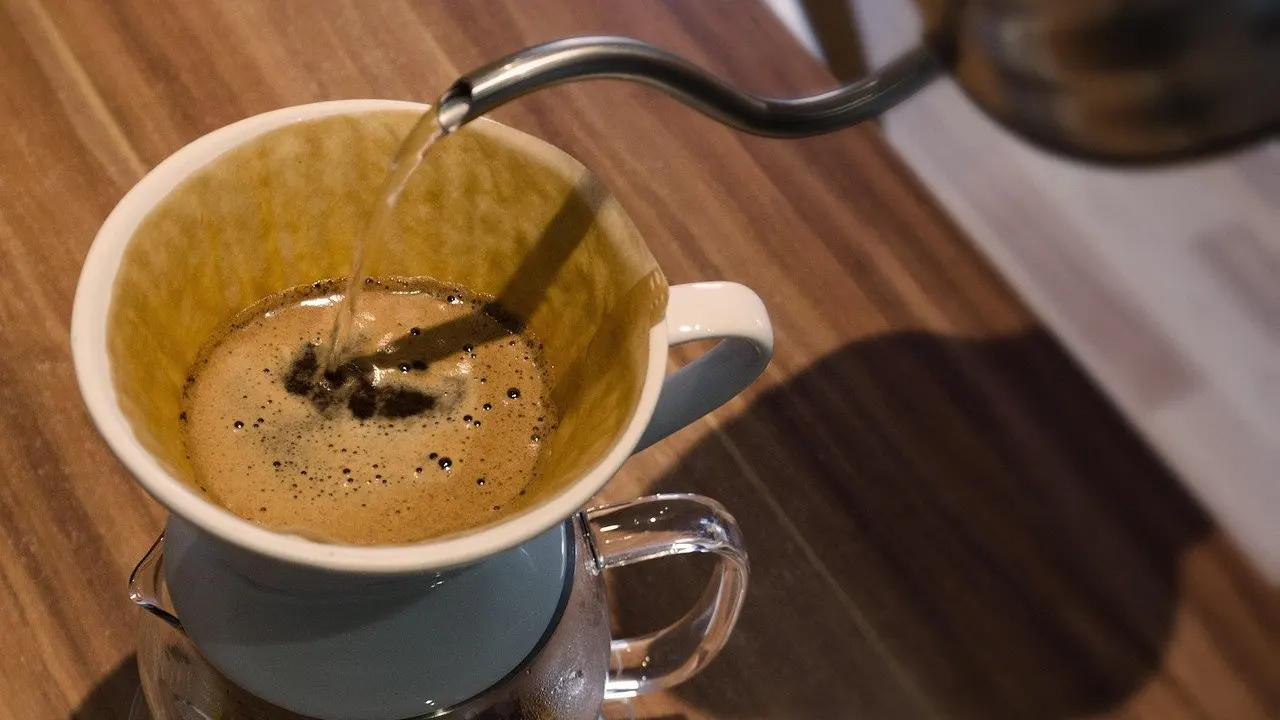
Pour-over means pouring hot water over grounds held in a dripper above a cup or server, and it suits people who enjoy a short, deliberate ritual. Its quick 2-3 minute brew time is the main practical appeal. The trade-off is that your pouring technique and your grind both show up in the cup, so it rewards patience while you learn.
If you are starting out, How To Use A Pour-Over Coffee Maker: A Simple Step-By-Step Guide For Better Coffee – Greatnorthernbrewing walks through the equipment and the pour. The wetting step at the start of the brew has its own guide, How To Bloom Coffee: Master The Essential Pour-Over Step For Richer Flavor – Greatnorthernbrewing, which is worth reading before you buy a kettle.
French press for body and simplicity
French press is an immersion method: you put ground coffee in, pour in the hot water, stir, plunge, and drink. The steps are few, which makes it a good first method for anyone who finds pour-over fiddly. The heavier body is the reason people choose it over drip, and the coarse grind it needs is easy to get from a burr grinder.
Choose a press when you want consistency without watching the clock closely, and choose a pour-over when you want a lighter cup and do not mind the technique. If you are torn, French Press Or Pour Over? How To Choose The Best Brew For Your Taste In 2026 – Greatnorthernbrewing compares the two on taste. For the full routine, How To Use A French Press: A Simple Step-By-Step Guide For Richer Coffee – Greatnorthernbrewing goes step by step.
AeroPress for adjustable results
AeroPress brewing is flexible by design. Brew guidance puts its temperature anywhere from 195 to 205 degrees F, depending on your preferred flavor profile. That wide range is the point of the device: you set the temperature by taste rather than following one fixed recipe. It suits people who like to experiment, and it is a sensible choice if you want something more adjustable than a press and less involved than a pour-over setup.
Espresso for concentrated, pressure-driven coffee
True espresso depends on machine pressure of about 9 bars (about 130.5 PSI), with water just under boiling at around 93.3 C. That is the reason espresso is the one method on this list that is a purchase decision first and a technique decision second. If you already own a capable machine, learn the dosing and extraction details in Pull Perfect Espresso Shots At Home: The Practical 2026 Guide To Consistent, Café‑Quality Results – Greatnorthernbrewing.
If you are weighing espresso against a regular cup, Espresso vs Coffee: How To Pick The Right Cup For Energy, Flavor, And Ritual (2026 Guide) – Greatnorthernbrewing helps you decide. If you want the flavor profile without the machine, Instant Espresso Vs Instant Coffee: The Quick Guide To Taste, Strength, And Convenience In 2026 – Greatnorthernbrewing explains the instant options.
Cold brew and iced coffee for chilled cups
Cold brew is on the National Coffee Association’s list of the most popular methods, and it works best when you plan ahead rather than brew to order. Iced coffee and cold brew are different drinks, and the choice between them is largely about how you want to make the cup. Iced Coffee Vs. Cold Brew: How To Pick The Right Chilled Coffee In 2026 – Greatnorthernbrewing sets out the differences.
- For a make-ahead batch: Cold Brew Coffee At Home: A Simple, Foolproof Recipe For Smooth, Low-Acidity Coffee In 2026 – Greatnorthernbrewing gives the full method, and How Much Coffee for Cold Brew? Exact Ratios, Batch Sizes, and Simple Tricks for 2026 – Greatnorthernbrewing covers quantities.
- For a quick chilled cup: Iced Coffee Made Easy: 7 Quick Recipes And Pro Tips For Perfect Cold Coffee At Home (2026) – Greatnorthernbrewing collects fast recipes.
- For anyone counting: Cold Brew Calories: How Many Calories Are In Your Cup (2026 Guide) – Greatnorthernbrewing covers what goes into the glass.
Beans, roast and freshness
Fresh beans do more for a home brew than any gadget, so settle this before you spend on equipment. Stanley’s French press guidance says the ideal time to use coffee beans is one day to two weeks after roasting. Treat that as a reason to buy from a roaster that prints a roast date and to buy in amounts you will finish within that window.
For storage, brewing guidance recommends an airtight bag at room temperature, not the fridge or freezer, because those conditions promote condensation. The same guidance says to grind right before you brew. Keep the beans whole until the kettle is hot.
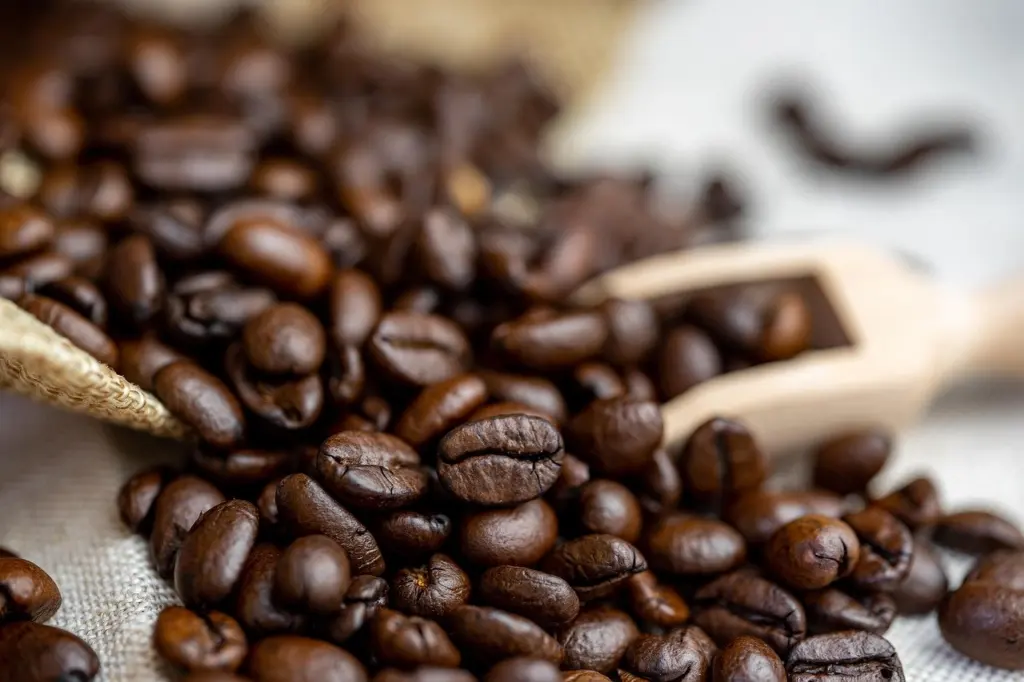
Choosing what to buy is a separate decision from brewing. These guides each take one angle on it:
- Roast level. Light Roast vs Dark Roast: A Practical Guide To Flavor, Caffeine, And Brewing In 2026 – Greatnorthernbrewing compares flavor, caffeine and brewing behavior.
- Species. Arabica Vs Robusta: Which Coffee Should You Choose in 2026 (Flavor, Farming, Brewing) – Greatnorthernbrewing explains how the two types differ in the cup and on the farm.
- Espresso labels. Espresso Beans Vs. Coffee Beans: How To Pick The Right Roast, Grind, And Flavor In 2026 – Greatnorthernbrewing clears up what the labels mean.
- Where to buy. The Best Coffee Roasters In The U.S. — 2026 Picks For Fresh, Flavorful Beans – Greatnorthernbrewing is the place to start for roasters, and Best Coffee In The World: 7 Exceptional Beans And How To Find Them In 2026 – Greatnorthernbrewing is for those who want to explore origins.
- No caffeine. How Decaf Coffee Is Made: From Bean To Cup — Methods, Safety, And Flavor Tips (2026) – Greatnorthernbrewing explains how decaf is produced.
Grinding for each method
A burr grinder is the right first upgrade for almost any method. Brewing guidance says to use a burr grinder, not a blade grinder, to get a consistent grind. Stanley adds that burr grinders do not transfer heat into the beans the way blade grinders do. A blade grinder gives uneven pieces, and uneven pieces extract unevenly, so fixing the grinder comes before fine-tuning anything else.
The rule that organizes every method is contact time: grind coarsely for longer contact time, finely for shorter. The reason is surface area. A finer grind creates more surface area for the water to touch, which gives a stronger, more extracted cup. A method that lets water sit for a long time already extracts plenty, so it needs a coarse grind to avoid over-extraction. A method with brief contact needs finer particles to get enough flavor out in that time.
Grind direction by method
- French press: go coarse. Stanley’s recipe calls for a coarse grind using a burr grinder, which suits the long steep.
- Pour-over: sit in the middle of the range. Its 2-3 minute brew is shorter than a press steep, so grind finer than you would for a press, then adjust by taste. If the cup tastes thin, go finer. If it tastes harsh, go coarser.
- AeroPress: treat the grind as adjustable along with the temperature. Because the recipe is flexible, change one variable at a time so you know what caused the change.
- Espresso: the finest grind of the group, because contact time is shortest and the machine’s pressure does the pushing. Adjust the grind in small steps; espresso is the most sensitive method to grind changes.
A chart of exact settings does not travel between grinders, because each grinder numbers its dial differently. Start from these directions, then taste and adjust. For a wider guide to texture and flavor, see Coffee Grind Size: The Simple Guide To Better Flavor In 2026 – Greatnorthernbrewing. For the pour-over specifically, Pour-Over Coffee Grind: How To Dial In The Perfect Texture For Cleaner, Balanced Cups (2026 Guide) – Greatnorthernbrewing goes deeper.
Coffee-to-water ratios
A good starting ratio for most filter-style brewing is 1 gram of ground coffee to 15 grams of water. It is a weight ratio, which is why a small digital scale earns its place on the counter: weight is easier to repeat from day to day than scoops, because scoops vary with the roast and the grind.
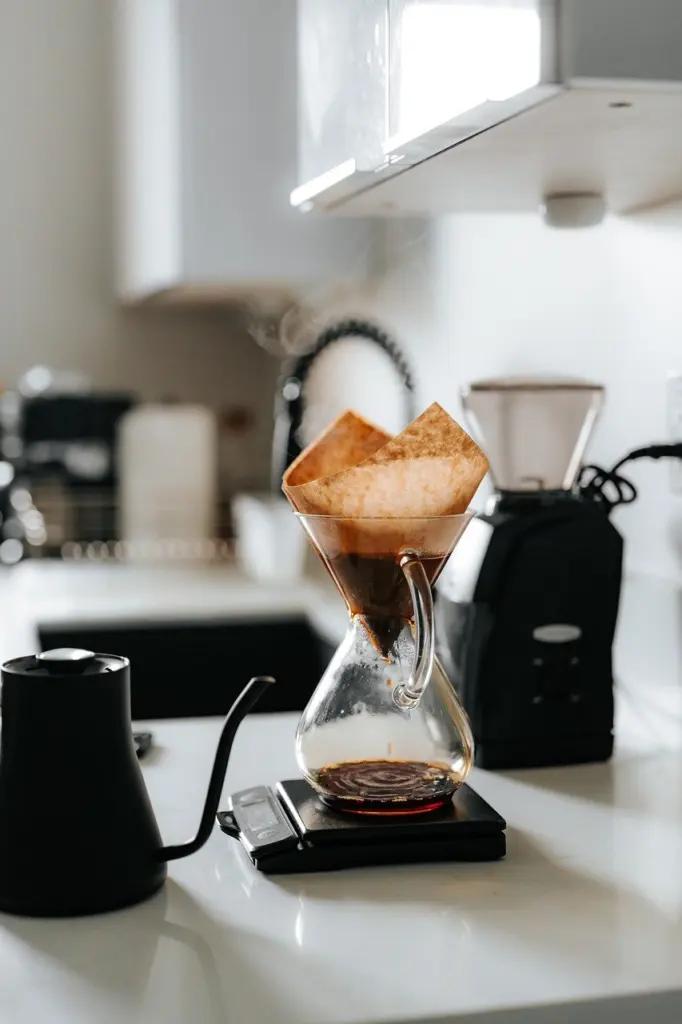
Do not mix ratios written in different units. Stanley’s French press guidance suggests a ratio of around 10:1 for mild to medium smooth coffee, and gives half a cup of whole beans for 40 oz of water. That recipe is written in cups and ounces, so follow it as written rather than converting it into the gram ratio above. The practical rule is to pick one system, either weight or the recipe’s own measures, and stay in it while you adjust.
- Change the ratio to change strength. More coffee for the same water gives a stronger cup; less gives a lighter one.
- Change the grind to change extraction. Once the ratio suits you, a finer grind extracts more and a coarser grind extracts less, as covered above.
- Change one thing at a time. If you alter ratio, grind and temperature together, you cannot tell which change helped.
Immersion methods have a dedicated ratio guide in French Press Coffee To Water Ratio: Exact Measurements For Rich, Balanced Coffee Every Time (2026 Guide) – Greatnorthernbrewing.
Water temperature and brew times
For most hot methods, the target is water just off the boil, between 195 and 205 degrees Fahrenheit. Letting the kettle rest briefly after it boils is an easy way to land in that range if you do not own a thermometer. The table shows how the main methods compare on time and temperature.
| Method | Time and temperature | Planning use |
|---|---|---|
| Pour-over | Brew time of 2-3 minutes | Fits a quick morning routine; plan on staying at the counter for the pour. |
| French press | Water at 195 F / 90.5 C; steep for 4 minutes, with at least 3-4 minutes in total as common practice | Set a timer and walk away; the coarse grind keeps the long steep from over-extracting. |
| Espresso | About 9 bars (about 130.5 PSI) of pressure; water around 93.3 C | Depends on a machine that can actually reach the pressure; not a method to improvise. |
Times and espresso figures come from a coffee brewing methods overview, and the French press temperature and steep time come from Stanley’s French press recipe.
Use the table to schedule your morning rather than to chase exact numbers. A press needs the longest wait and the least attention, a pour-over needs less time but more attention, and espresso needs equipment capable of the pressure. The AeroPress sits between them, with its temperature range left to your taste.
Putting a brew together
A French press routine
French press is the easiest method to turn into a repeatable routine, because every variable is fixed in advance. Follow this order:
- Grind your beans coarsely with a burr grinder, just before brewing.
- Heat the water until it is just under boiling, at 195 F / 90.5 C.
- Add the grounds, then pour in the hot water.
- Stir to make sure the grounds are properly soaked.
- Set a timer for 4 minutes.
- Plunge, then pour straight away, so the coffee does not keep extracting against the grounds.
The steps come from Stanley’s French press recipe. If the result is bitter or muddy, the usual culprits are a grind that is too fine or beans past their best, which is why the freshness window above matters.
A pour-over rhythm
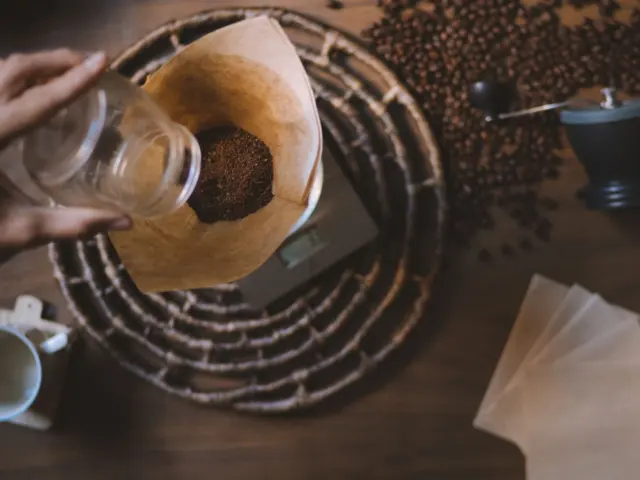
Pour-over is less of a recipe and more of a rhythm. Grind just before brewing, heat the water to just off the boil, wet the grounds first so they can release gas, then pour steadily until you reach your target amount of water. Keep the whole brew inside the 2-3 minute window; if it drags on, the grind is probably too fine, and if it rushes through, it is probably too coarse. Weighing the coffee and water on a scale makes that diagnosis far easier because the ratio stays constant while you change the grind.
Brewing without a coffee maker
You can still brew good coffee without dedicated gear, because several methods rely on the same principles as the ones above. Press-style brewing means you put ground coffee in a vessel, pour in the hot water, stir, plunge, and then drink. Stovetop brewing works differently: it boils water to create steam that passes through the ground coffee.
The sensible approach when improvising is to keep the fundamentals even if the gear changes. Use fresh beans, grind them coarsely when the coffee will sit in the water, and watch the time. A coarse, long-contact brew is the most forgiving setup when you lack precise tools.
From the cup to the table
Home brewing is as much routine as technique. As one coffee guide puts it, making coffee can be a ritual that becomes part of a routine and provides tremendous satisfaction. That is the best argument for settling on a method and sticking with it for a while: repeated brews teach you more than constantly switching.
Once a basic cup is reliable, the same coffee becomes the base for other drinks and treats. For an overview of the cafe menu, Different Coffee Drinks: The Practical Guide To 2026’s Most Popular Cups – Greatnorthernbrewing explains what each drink is. For things to add to the cup, there are recipes for Make Luxurious Coffee Creamer With Condensed Milk: Easy 3‑Ingredient Recipes & Tips (2026) – Greatnorthernbrewing and Homemade Vanilla Syrup For Coffee: Easy Recipe, Variations, And Barista Tips (2026) – Greatnorthernbrewing.
- Creamy and cold: Whipped Coffee Recipe: 5-Minute Dalgona-Style Coffee For Creamy At-Home Café Drinks – Greatnorthernbrewing and Quick Creamy Coffee Frappe Recipe: Make a Café-Style Frappé at Home (2026) – Greatnorthernbrewing.
- Breakfast in a glass: Coffee Smoothie Recipe: Energizing Morning Blend (Easy 10‑Minute Recipe) – Greatnorthernbrewing.
- For the evening: 12 Boozy Coffee Drinks To Try Tonight: Easy Recipes And Pairings For 2026 – Greatnorthernbrewing and How To Make An Espresso Martini At Home: A Quick, Foolproof Recipe For Coffee Lovers – Greatnorthernbrewing.
Frequently asked questions
Does roast level change the water temperature I should use?
It can. Brewing guidance suggests aiming for 200 F (93 C) for light roasts and 205 F (96 C) for dark roasts, inside the general just-off-the-boil range.
What water should I brew with?
Filtered water is best, and distilled water is the one to avoid, according to the same brewing guidance.
Does a stovetop pot make espresso?
No. A stovetop pot works by creating steam that passes through the grounds, and it does not create the pressure required to make a true espresso.
Which pour-over dripper should I buy?
The most popular options are the V60, the Kalita Wave and the Chemex. Pick by the one you will use daily, since technique matters more than the shape of the cone.