| Drink | Proportions and size | Planning use |
|---|---|---|
| Espresso | About 1:2 coffee to water; 30 ml shot | The base for most cups. Order it straight when you want the coffee itself. |
| Ristretto | Same dose with less water, around 1:1–1.5; 20 ml shot | A smaller shot with slightly less caffeine (about 55–60 mg) than a full shot. |
| Lungo | Around 1:3–4; fills a 50–60 ml cup | A longer shot with more caffeine (about 75–90 mg) than a standard one. |
| Americano | Espresso topped with hot water at roughly 1:2–4; about 240 ml | A large black coffee built on espresso. |
| Long black | About 160 ml | Smaller and stronger than an Americano. |
| Cortado | Two ounces of espresso diluted with two ounces of steamed milk | A small drink where milk softens the espresso without taking over. |
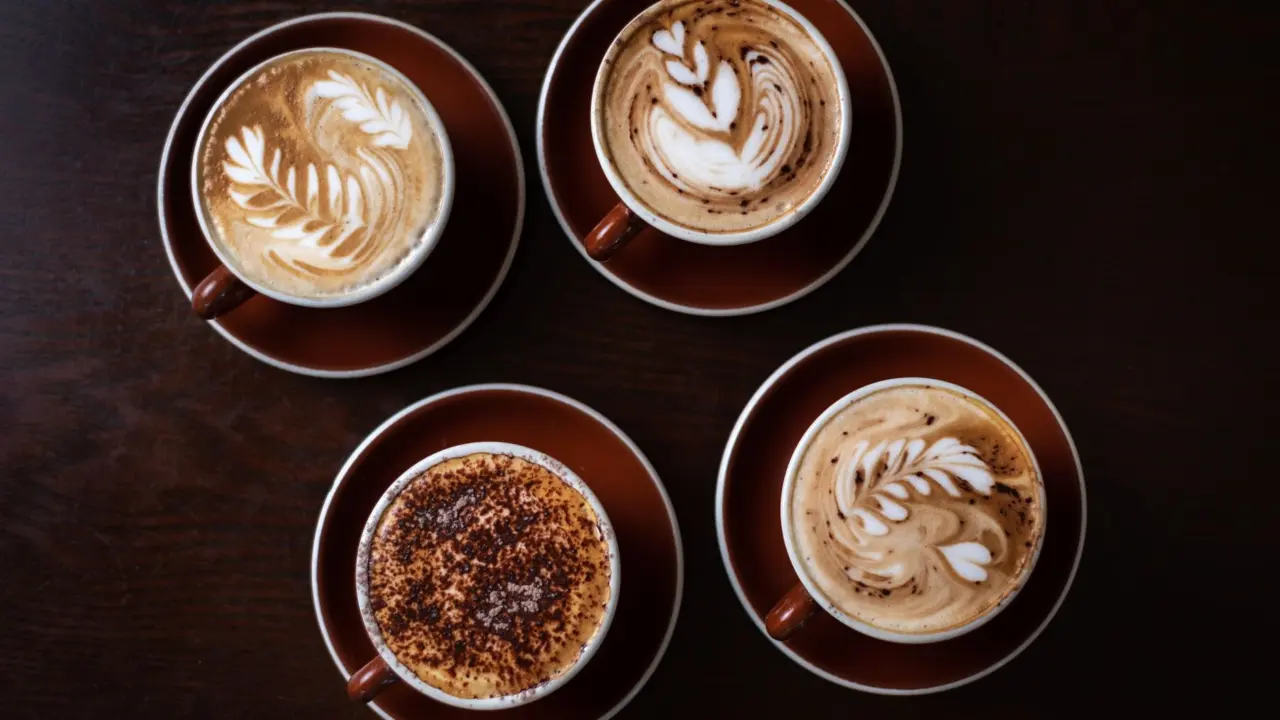
| Cappuccino | Equal parts espresso, steamed milk and milk foam | Choose it for an even split of coffee, milk and foam. |
| Latte | Espresso mixed with steamed milk, with a layer of foam on top | Choose it when you want steamed milk to lead. |
| Flat white | More espresso than milk; steamed milk poured over espresso | Choose it for a milk drink that still tastes clearly of espresso. |
| Macchiato | Espresso with a small amount of steamed milk or foam on top | Choose it for close to straight espresso with a touch of milk. |
| Cold brew | Ground coffee steeped in cold water for 12 to 24 hours; about 200 mg caffeine per 16 oz | Plan ahead, then serve it cold in a large glass. |
Proportions and sizes come from the Folgers guide to types of coffee and the Biodynamic Coffee drinks guide.
Different coffee drinks mostly differ in how much milk or water sits on an espresso base, so ratio and cup size tell you more than the name does. Pick by how milky and how strong you want the cup.
Once you know which cup you want, the next step is how to brew how to brew coffee at home, which covers the equipment and methods behind the base.
Milk drinks and what the ratio changes
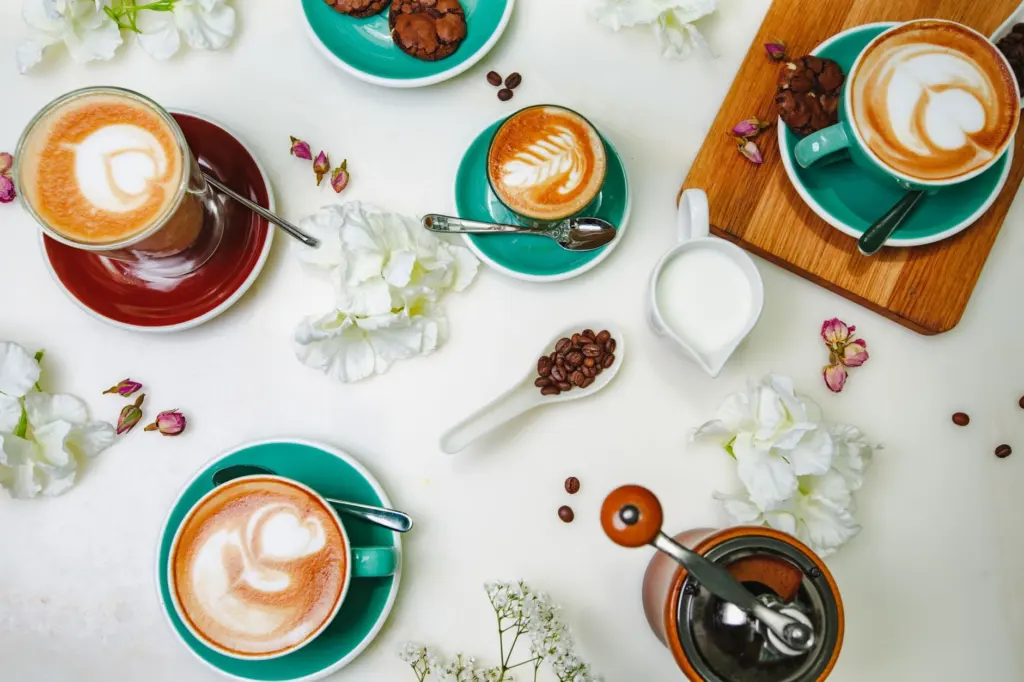
A latte and a cappuccino differ in how much milk and foam share the cup with the espresso. A cappuccino is made with equal parts espresso, steamed milk and milk foam, as Folgers describes it. A latte is espresso with more steamed milk and only a light layer of froth, according to SF Bay Coffee. In practice, the latte puts steamed milk first, while the cappuccino gives foam as large a share as the milk itself.
A flat white moves the balance back toward coffee. Folgers notes that it has a higher amount of espresso than milk, with steamed milk poured over the espresso. Its milk-to-espresso ratio is higher than a macchiato’s, according to a guide to espresso drinks. The macchiato is espresso with just a small amount of steamed milk or foam on top. Milk content therefore rises from macchiato to flat white to latte, and that order is the quickest way to choose.
- Choose a latte when you want the steamed milk to lead and the coffee to sit behind it.
- Choose a cappuccino when you like a distinct foam layer and an even split between coffee and milk.
- Choose a flat white when you want a milk drink with a clearly espresso-forward taste.
- Choose a macchiato when you want something close to straight espresso, only marked with milk or foam.
- Choose a cortado when you want a small cup where the espresso is diluted by an equal measure of steamed milk.
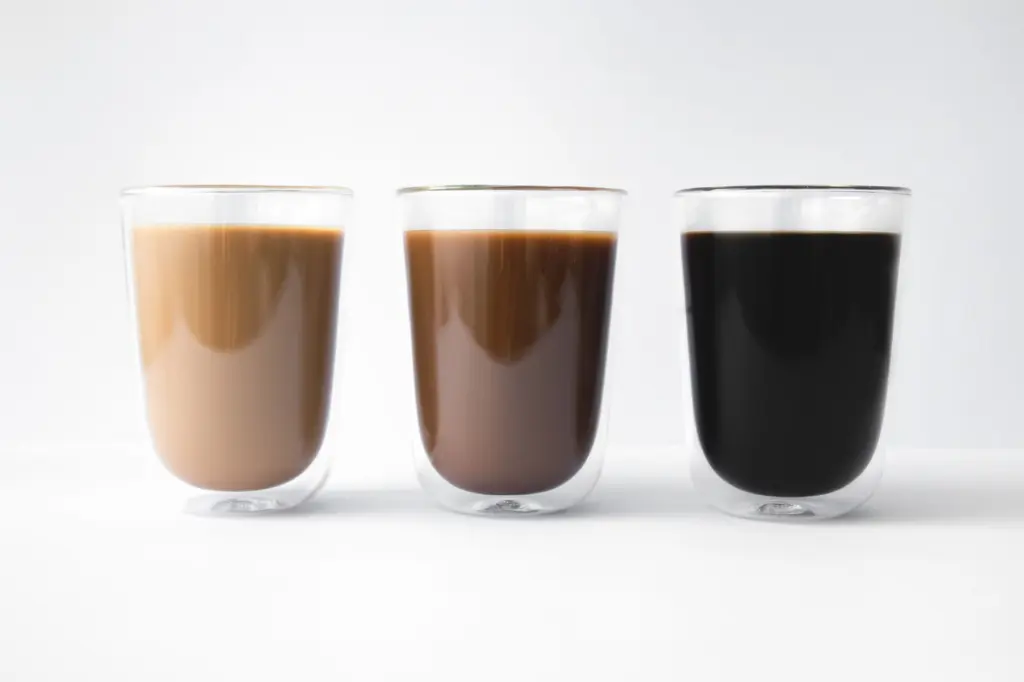
Black espresso drinks: ristretto, lungo, Americano and long black
These drinks leave the milk out and change the water instead. Per the Biodynamic Coffee guide, a standard espresso runs at about 1:2 coffee to water. A ristretto is pulled with the same dose of coffee but less water, around 1:1–1.5, which gives a 20 ml shot. A lungo goes the other way, at around 1:3–4, filling a 50–60 ml cup.
An Americano is espresso topped with hot water at roughly 1:2–4, giving a cup of about 240 ml. A long black is about 160 ml, which makes it smaller and stronger than an Americano.
- Pick a ristretto if you want the smallest, most compact shot.
- Pick a lungo if you want a longer shot without adding hot water afterwards.
- Pick an Americano for a large cup you can sip slowly.
- Pick a long black if you want a black coffee that is stronger and smaller than an Americano.
Which drink is strongest
No single drink wins on every measure, because strong can mean intense flavor or high caffeine per cup. For flavor, a barista guide on Substack describes espresso as having strong, intense flavor and body, and every milk drink above is built on that.
For caffeine, the figures vary with the shot style. The Biodynamic Coffee guide, citing USDA FoodData Central, puts a single 30 ml espresso shot at about 64 mg. A ristretto has slightly less, about 55–60 mg, because less water means less total caffeine. A lungo has more, about 75–90 mg, because the water keeps pulling caffeine from the coffee throughout the shot. The same guide lists Cuban coffee (cafecito, colada, cortadito) at about 300 mg, the highest figure in its list.
Beans matter as well as method. The guide notes that robusta-based drinks run roughly 2x arabica, and our comparison of Arabica Vs Robusta: Which Coffee Should You Choose in 2026 (Flavor, Farming, Brewing) – Greatnorthernbrewing explains how the two differ. If caffeine is your concern, check the bean and the cup size before the drink name.
Cold brew
Cold brew uses no hot water and no pressure. Folgers describes it as ground coffee steeped in cold water for 12 to 24 hours. That wait is the main practical consequence: start it the day before, not on the morning you want it.
The Biodynamic Coffee guide gives about 200 mg of caffeine per 16 oz of cold brew. That is well above a single espresso shot, though the serving is far larger, so it suits a long, slow drink better than a quick hit.
If you would rather brew hot at home, How To Use A French Press: A Simple Step-By-Step Guide For Richer Coffee – Greatnorthernbrewing walks through that method step by step.
Espresso as the base
Espresso is concentrated coffee served in a small cup, and Folgers notes it is commonly used as the base for lattes, cappuccinos and macchiatos. It is brewed under high pressure, around 9 bars, according to the espresso drinks guide, and typically served in small portions of about 1 ounce.
That concentration explains the whole menu. The same shot can anchor a macchiato, a flat white or an Americano, because the change comes from what is added around it, not from the coffee. Once you know the proportion on the espresso, you can predict how a drink will taste before you order it.
Frequently asked questions
Is a long black the same as an Americano?
No. A long black is about 160 ml, which makes it smaller and stronger than an Americano, which comes to about 240 ml, according to Biodynamic Coffee.
How big is a typical latte or cappuccino?
Lattes and cappuccinos are typically served in cups of 6-12 ounces, against about 1 ounce for an espresso, so most of the cup is milk and foam, according to the espresso drinks guide.
Why does a lungo have more caffeine than a regular shot?
The extra water keeps pulling from the coffee for the whole shot, so the total caffeine rises, as Biodynamic Coffee explains.
What is the difference between a cortado and a flat white?
A cortado dilutes two ounces of espresso with two ounces of steamed milk, while a flat white is described by Folgers as having a higher amount of espresso than milk, with steamed milk poured over the espresso.