Reaching for the darker jar feels like choosing strength, but instant espresso vs instant coffee is less about caffeine than purpose: instant espresso, sold as espresso powder, is typically for baking, while instant coffee is made for drinking.
Both are dried coffee that dissolves in water, so neither needs a machine. To see what you give up by skipping one, start with how to brew coffee at home, then come back here to choose the right jar.
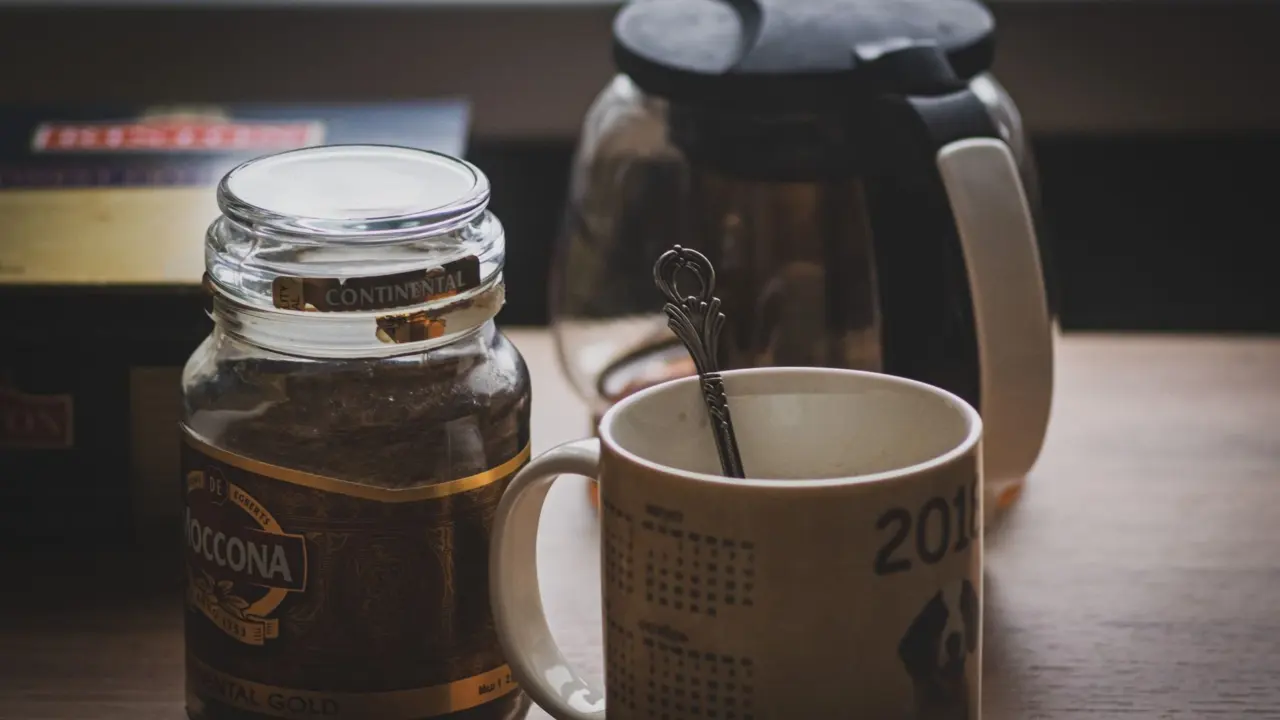
Instant espresso and instant coffee side by side
Instant coffee is made from dried coffee extract and is meant for drinking. Espresso powder is the product most often sold as instant espresso. It is darker and more intense than instant coffee, and it is typically used in baking rather than in the cup. The labels look similar on a shelf, but the jobs differ, and that difference settles most buying decisions.
| Attribute | Instant espresso (espresso powder) | Instant coffee | Planning use |
|---|---|---|---|
| Main job | Typically used for baking, not drinking | Dried coffee extract meant for drinking | Buy by what you will do with it, not by the word espresso |
| Intensity | Darker and more intense than instant coffee | Less intense than espresso powder | Use the powder where coffee flavour must come through a recipe |
| Dissolving | Dissolves easily in water | Brewed coffee dehydrated into soluble granules | Both mix into hot liquid without equipment |
| Flavour against ground coffee | Described as less bitter than ground coffee | Often more bitter and bland than ground coffee | Do not expect instant coffee to match a fresh brew |
| Usual beans | Not the basis of the comparison | Tend to be Robusta rather than Arabica | Explains the blunt, bitter edge of cheaper jars |
These descriptions come from Coffeehan’s guide to espresso powder, ground coffee and instant coffee and Grind’s comparison of instant and ground coffee.
Misunderstandings about flavour
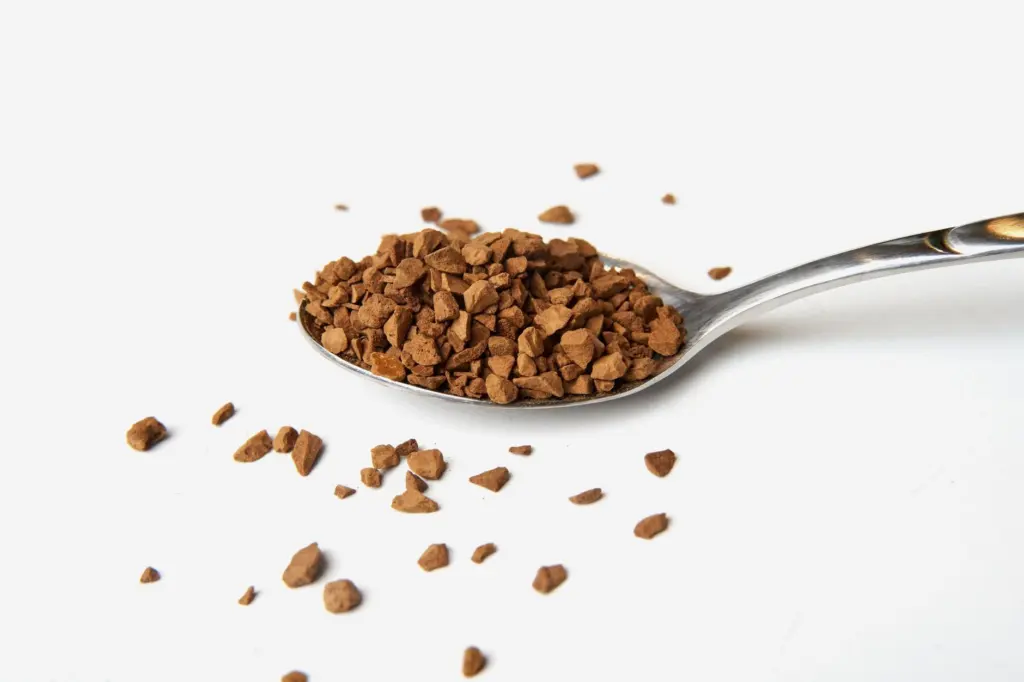
Most disappointment with instant coffee comes from expecting it to behave like a freshly brewed cup. It is made by brewing coffee and then carefully dehydrating the liquid into soluble granules, according to Grind. Those granules are usually made from Robusta beans rather than Arabica. Coffeeza adds that processing strips out aromas and oils and leaves bitterness behind. Instant coffee is therefore a convenience product first and a flavour product second.
- “Instant espresso will taste like a café shot.” A real shot is made when an espresso machine forces very hot water through tightly compacted ground coffee, as Waka Coffee describes it. A powder stirred into water skips that pressure step, so treat it as a concentrated coffee ingredient rather than a replacement for a machine.
- “Bland means gentle.” Instant coffee is often a little more bitter and a lot more bland than ground coffee. If you dislike bitterness, a cheaper jar is not the mild option it appears to be.
- “The stronger jar is the better drink.” Intensity is what makes espresso powder useful in recipes. That does not make it the better choice for a plain mug, because its usual role is baking.
Flavour is only half the story, though, because the word espresso also makes people assume a large caffeine hit.
Strength and caffeine
Instant coffee delivers a modest caffeine dose per cup, and a shot of brewed espresso falls inside the same range. The numbers below describe cups and shots, not spoonfuls of powder.
Instant coffee against a shot of espresso
A typical 8 oz cup of instant coffee has 30 to 90 mg of caffeine, depending on brand and roast, according to Indulgexpress. A shot of espresso has about 63 mg of caffeine in roughly 1 to 1.75 oz of liquid, according to Waka Coffee. The shot sits in the middle of the instant range. What differs is concentration: the shot packs its caffeine into a very small drink, while instant coffee spreads it across a mug.
The practical reading is that the widest variable is the brand, not the category. A weak instant cup and a strong one can differ by a large margin, so a jar you trust matters more than the word on its front.
What the shot figures do not tell you
The espresso numbers describe coffee brewed on a machine. They do not describe espresso powder, whose caffeine depends on the individual product. Read the label for the serving size and the caffeine per serving, and compare those two figures between jars instead of assuming that espresso on the front means more. Ground coffee is a separate comparison, which the questions at the end address.
Best uses: the mug and the oven
Drinking
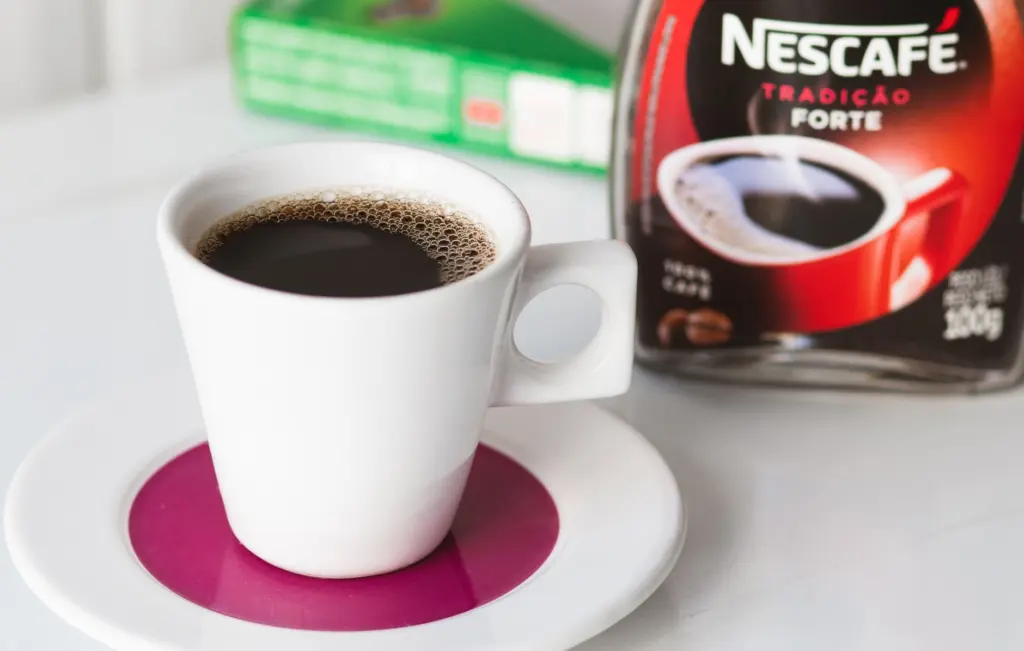
Instant coffee is the product made for the mug. It suits hot water, a quick desk drink or a travel kit, where speed counts for more than aroma. Expect a bitter, simple cup and judge it against that standard, not against a fresh brew.
Baking
Yes, instant espresso can be used for baking, and baking is its usual purpose. Coffeehan notes that espresso powder is typically used for baking rather than drinking, and that it dissolves easily in water. Easy dissolving matters in recipes because the powder can disappear into the wet ingredients instead of leaving grit. Its darker, more intense character also means the coffee flavour can stand up inside a bake.
When to move on to fresh grounds
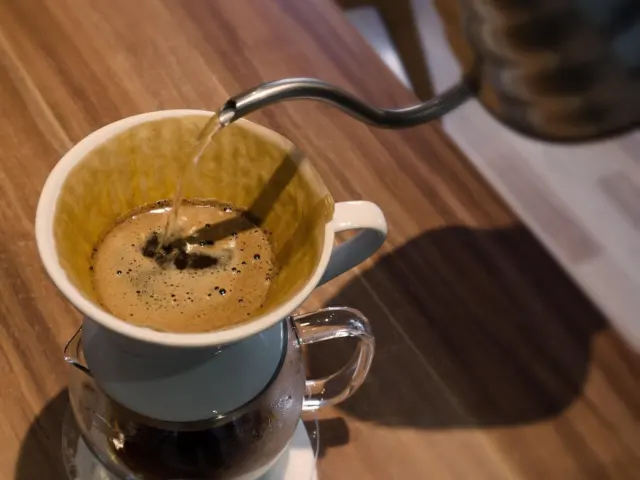
If the jar’s flat, bitter character starts to bother you, fresh grounds are the way to get flavour that drying removes. The pour-over step in How To Bloom Coffee: Master The Essential Pour-Over Step For Richer Flavor – Greatnorthernbrewing shows how a small habit improves a brew. how to use a moka pot covers another way to brew from grounds without an espresso machine.
Choosing by strength, use and cost per cup
The decision comes down to four questions, and the answers are usually clear once you know what you will do with the jar.
- Choose instant coffee for plain drinking. It is the product designed for the cup, and its caffeine per mug stays within a modest range.
- Choose instant espresso (espresso powder) for baking and recipes. Its intensity and easy dissolving are what recipes need, and that is its typical role.
- Compare cost per cup, not cost per jar. Servings and doses differ between products, so divide the price by the number of servings on the label. A pricier powder that suits a recipe can still be the cheaper choice if it replaces a larger quantity of weaker coffee.
- Skip both when aroma matters. Drying removes aromas and oils, so a morning cup you want to savour is better made from ground coffee.
A few narrower questions are left, and the answers below cover them.
Frequently asked questions
| Question | Answer |
|---|---|
| Does ground coffee have more caffeine than instant coffee? | Yes. Grind states that ground coffee gives a higher caffeine content than instant coffee. |
| Can drip coffee have more caffeine than espresso? | Yes, per serving. Waka Coffee lists 70 to 140 mg in an 8 oz cup of drip coffee against about 63 mg in a shot of espresso. |
| How much time does the powder save compared with espresso? | A shot is extracted in about 25 to 30 seconds under pressure, according to Indulgexpress, and it needs a machine. A powder only needs to dissolve in water. |