This cold brew recipe steeps coarse-ground coffee in cold water for 12 to 24 hours, then strains it. Start with one part coffee to four parts water by volume, steep about 18 hours, and dilute the concentrate to taste.
The method is forgiving once you understand what each variable does. For the wider picture of equipment and technique, see our guide to how to brew coffee at home.
How cold brew extraction works
Cold brew is made by steeping coarse-ground, dark-roasted beans in cold water for 12 to 24 hours, according to the American Homebrewers Association. Cold water is less efficient than warm water at pulling flavour out of coffee, as Steampunk Coffee explains, and that is why the steep is so long.

The same Homebrewers Association guidance notes that the process needs a higher ratio of coffee to water than hot brewing. Hot water extracts the flavours of the beans along with astringent and bitter qualities. Cold water leaves much of that behind, which is where the smooth, mellow character of cold brew comes from. If you want to see the hot-water side of that contrast, our guide on How To Use A Pour-Over Coffee Maker: A Simple Step-By-Step Guide For Better Coffee – Greatnorthernbrewing walks through a quick, hot extraction.
That mechanism gives you three levers, and each one shapes the cup in a predictable way:
- Grind size: coarse grounds suit the long contact time of a cold steep.
- Coffee-to-water ratio: because cold water extracts slowly, the dose is higher than for hot coffee, and the result is usually a concentrate.
- Steep time: time compensates for the cold water, so it is the main way to change strength once the dose is set.
Choosing and grinding the beans
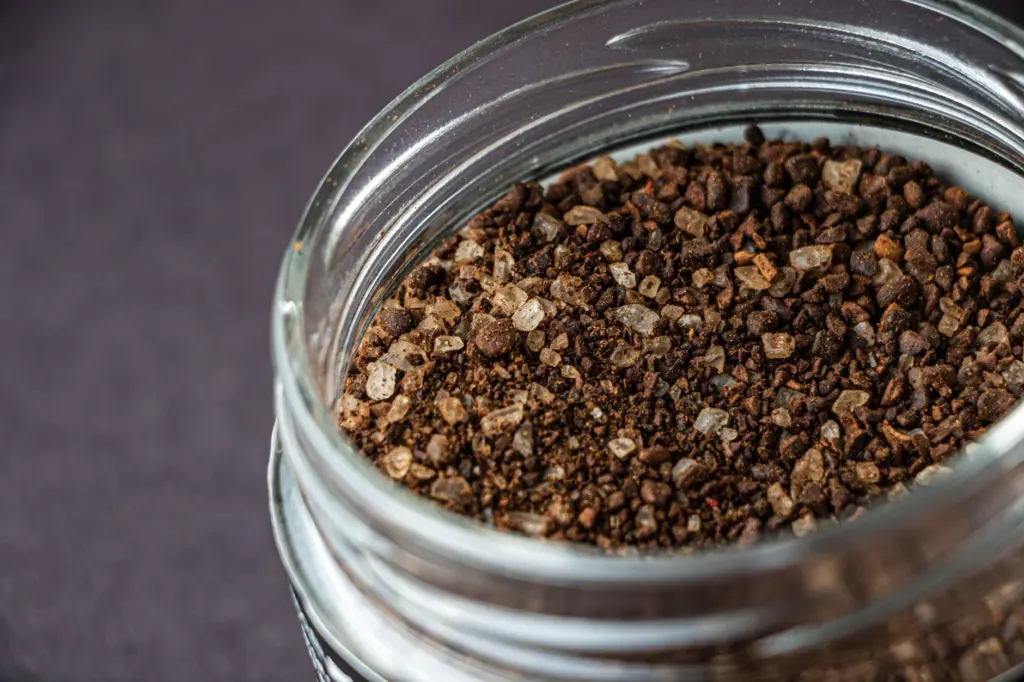
Grind the beans until coarse, as the Homebrewers Association instructs. Some home grinders have a dedicated coarse setting, and Fork in the Kitchen suggests the French press setting as a reliable target. For a small 250 g water batch, Steampunk Coffee describes a medium-to-coarse grind. Buy whole beans and grind them yourself so that you control the particle size. A dark roast matches the traditional definition of cold brew, though the grind and ratio matter more to the result than the exact bean.
Ratio and steep time at a glance
Three published starting points cover most home batches, from a single glass to a jar of concentrate.
| Batch size | Coffee | Water | Planning use |
|---|---|---|---|
| One glass | 20 g | 250 g | A starting dose to adjust up or down; weigh both for repeatable results |
| Two cups | 40 g | 500 g | The same ratio scaled up for sharing |
| One jar of concentrate | 1 cup (82 g) whole beans | 4 cups (946 mL) filtered water | Volume-based 1:4 batch, diluted when served |
Figures are from Steampunk Coffee for the weight-based rows and Fork in the Kitchen for the jar batch.
What ratio should I use?
Use a 1:4 ratio of coffee to water if you want a concentrate you can dilute, as both Fork in the Kitchen and Vanilla And Bean recommend. Vanilla And Bean notes that this ratio produces a concentrate rather than a drink-ready coffee. The Homebrewers Association gives a much broader range of 1-2 oz coffee beans per cup of water, which shows how much room there is to tune strength to your taste. Weigh the coffee and water if you have a scale, since weight is more repeatable than a measuring cup of grounds.
How long should it steep?
The published ranges overlap. The Homebrewers Association and Fork in the Kitchen both say 12 to 24 hours. Steampunk Coffee puts the typical range at 12 to 18 hours and found 14 hours worked well for its 250 g batch. Fork in the Kitchen calls around 18 hours the sweet spot. A first batch at about 18 hours sits inside every one of those ranges, so use it as your baseline, then move toward the short end for a lighter cup or the long end for a fuller one.
Making one batch, step by step
This single batch follows the Fork in the Kitchen quantities and makes a concentrate.
- Measure the beans. Weigh out 1 cup (82 g) of whole beans.
- Grind coarse. Use the French press setting on your grinder.
- Combine. Put the grounds in a clean jar, add 4 cups (946 mL) of filtered water and stir so every ground is wet.
- Steep. Cover the jar and leave it on the counter or in the fridge for 12 to 24 hours. Aim for about 18 hours the first time.
- Strain. Separate the liquid from the grounds through a filter, and discard the grounds.
- Dilute and chill. Add water to the concentrate to your preferred strength, and serve over ice.
Using a French press
A French press doubles as a steeping vessel and a strainer: when the time is up, you simply press the filter down to separate the grounds. Vanilla And Bean sets it at room temperature overnight, or about 12-14 hours. A French press holds only three cups of water, so the full jar batch above will not fit. Scale the quantities down together and keep the 1:4 ratio. If you are still deciding between the two brewers for everyday coffee, French Press Or Pour Over? How To Choose The Best Brew For Your Taste In 2026 – Greatnorthernbrewing compares them.
Adjusting strength and flavour
Treat the first batch as a baseline and change one thing at a time. Steampunk Coffee calls 20 g of coffee a good starting point for a 250 g batch, and it can be adjusted from there. Because cold water extracts slowly, the steep window gives you a second control, and the guidance above spans 12 to 24 hours.
- Cup tastes weak: raise the coffee dose, or lengthen the steep within the 12 to 24 hour range.
- Cup tastes too intense: shorten the steep toward 12 hours, or dilute more when serving.
- Grind seems too fine or too fussy to strain: go coarser. Preparing a coarse grind is the starting instruction from the Homebrewers Association.
- Scaling up: keep the weight ratio, for example the paired 40 g and 500 g quantities for two cups, and taste early in the steep window.
Keep notes on dose, time and dilution. Cold brew rewards small, recorded changes more than big swings.
Storage and serving
Strained cold brew keeps in the fridge for up to a week, according to both Fork in the Kitchen, which says it starts to lose flavour after that, and Vanilla And Bean. Write the brew date on the jar so you know when to finish it.
Because the 1:4 ratio produces a concentrate, you dilute it with water or milk when you serve it. Pour it over ice and adjust the dilution glass by glass, which lets one jar serve both people who like it strong and people who like it mild.
Frequently asked questions
Can I use preground coffee?
Fork in the Kitchen advises against it for cold brew. Grind whole beans coarsely yourself, using the French press setting on your grinder.
Should I steep on the counter or in the fridge?
Either works. The Fork in the Kitchen recipe card lets the batch rest on the countertop or in the fridge for 14 to 24 hours, and the general range is 12 to 24 hours. Choose by convenience, and taste the batch before straining if you are unsure of the timing.
What if my concentrate comes out too strong?
Dilute it with additional water, as Fork in the Kitchen suggests. It is a concentrate, so it is designed to be thinned before drinking.