| Situation | Supported value or effect | Planning use |
|---|---|---|
| Double basket dose | 18 g ground coffee | Starting dose for a double basket. Weigh it rather than scooping. |
| Bottomless portafilter with triple basket | 20 g ground coffee | Use this only if your basket really is a triple. |
| Brew ratio | 1:1.5, so 18 g in gives about 27 g out | Set your scale’s stop weight before the shot starts. |
| Shot time | 25–30 seconds from pump start | Judge the shot against this window, timed from the pump. |
| Liquid reaches 30 g before 25 seconds | Too fast: make the grind finer | Change the grinder first and leave dose and tamp alone. |
| Takes more than 30 seconds to reach 30 g | Too slow: make the grind coarser | Open the grind up in small steps. |
| Pulls on time but tastes harsh | Make the grind coarser and increase the dose | A timing fix will not help here, so change both settings together. |
| Grind far off in either direction | Too coarse: watery and bitter. Too fine: clogged filter | Start from the middle of the range and move toward the problem. |
Dose, ratio, timing and basket-fix figures come from a roaster’s step-by-step espresso guide. The watery-versus-clogged grind effects come from another roaster’s espresso brewing page.
Espresso shots at home become repeatable when you weigh an 18 g dose into a double basket and stop near 27 g out, inside 25–30 seconds from pump start. Then adjust only the grind.
Espresso is one method among several. If you are choosing between them, the hub on how to brew coffee at home compares the options, and the rest of this page stays with the espresso machine.
What the numbers mean for your setup
The table turns into a handful of choices, and the first is the most practical: buy a scale before you buy anything else. These are the decisions the figures drive.
- Weigh dose and output. A roaster’s guide notes that dialing in gets substantially easier with a scale. Judging by cup volume hides the changes you are trying to see.
- Match the dose to the basket. Use 18 g for a double basket and 20 g only for a bottomless portafilter with a triple basket. Overfilling a smaller basket changes how much resistance the water meets.
- Treat grind as the main control. When the shot time is off, the grinder setting is the first thing to change. Dose and tamp are the steadier variables.
- Grind small amounts. For typical home grinders, grinding small amounts at a time and dialing in by trial suits the specific machine you own.
- Accept the machine’s ceiling. The same page points out that the quality of the espresso machine is a large factor in the cup, because it governs brewing temperature and pressure. Better technique cannot fully offset a weak machine.
Equipment you need
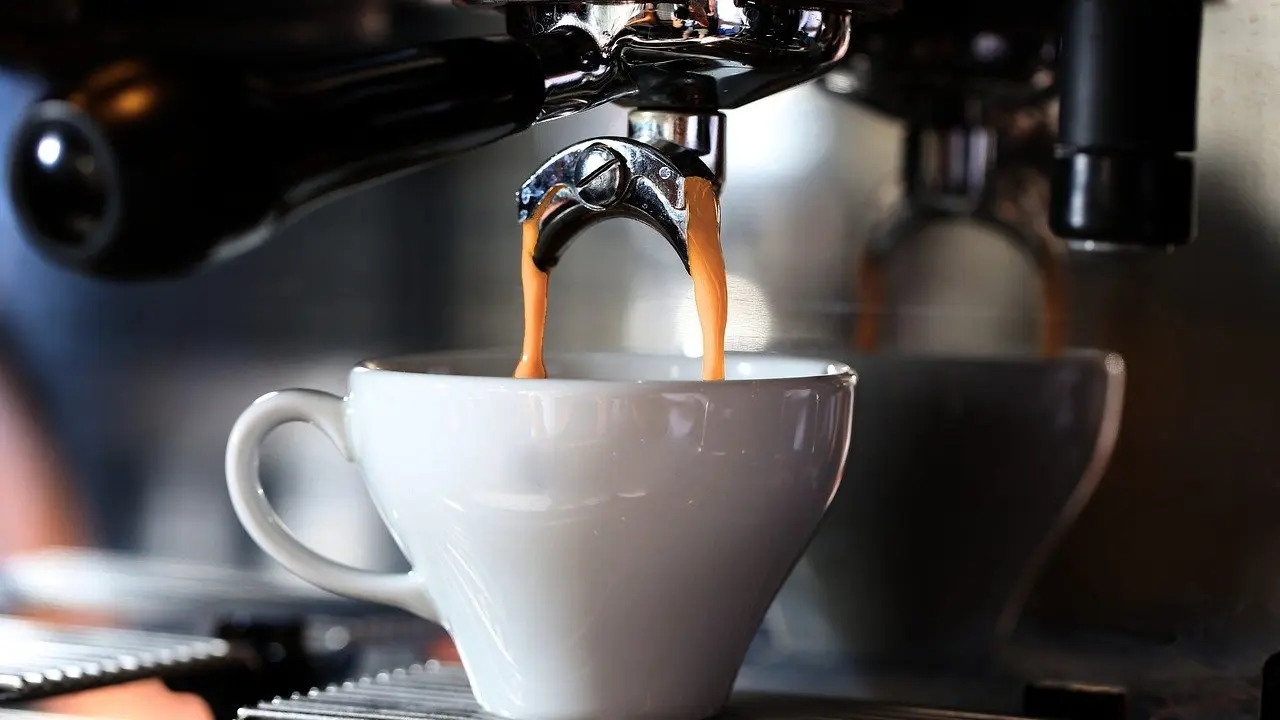
A home setup needs an espresso machine, a portafilter and basket, a grinder, a tamper, a scale and fresh espresso beans. Each one controls a different part of the shot.
Machine and portafilter
The machine supplies temperature and pressure, and the portafilter holds the coffee puck. A bottomless portafilter shows the flow directly, which helps you spot uneven extraction, but it pairs with a specific basket size. Check your basket’s capacity before choosing a dose.
Burr grinder
A burr grinder lets you make small, repeatable steps in grind size, and that is the adjustment you will make most. Start with a fine grind that is finer than table salt and coarser than flour, then refine from there. For dark or espresso roasts, a fine setting is the usual direction.
Tamper and scale
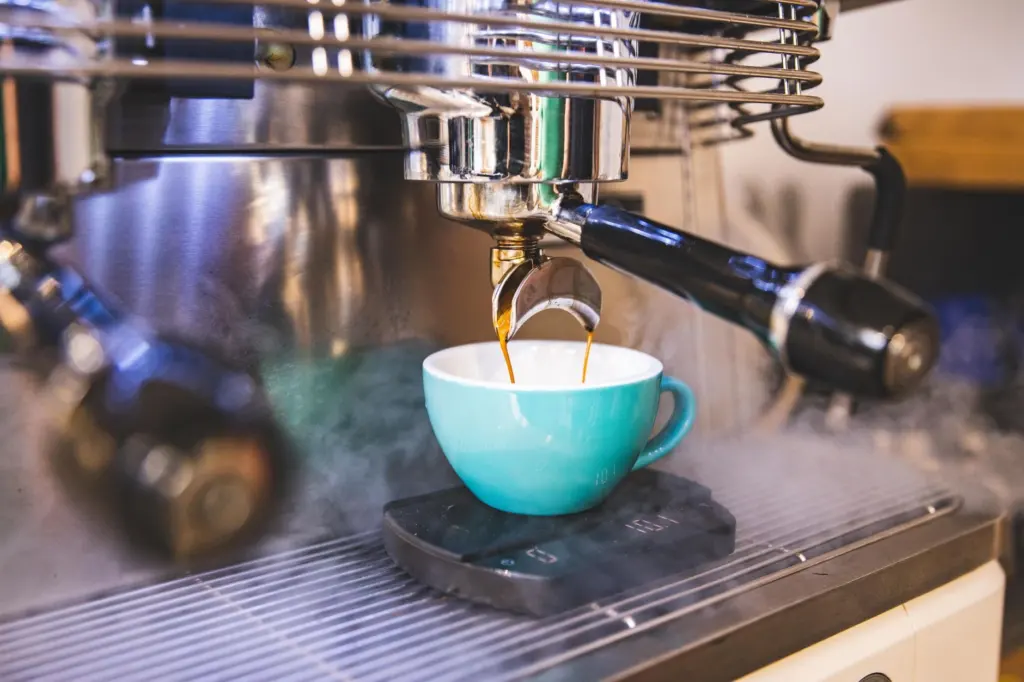
The tamper levels the bed. Technique matters more than force: keep it level and press straight down, because the amount of pressure is not nearly as important as consistency. The scale goes under the cup, so one reading tells you the yield and the other tells you whether the shot is on time.
Dose, yield and time
The core recipe is a ratio of 1:1.5, which means 18 g of ground coffee in a double basket yields about 27 g of liquid. The clock starts when the pump starts, not when you lock the portafilter in, and the target is 25–30 seconds. A second roaster’s page gives a broader 20–30 seconds for a single or double shot and settles on 25 seconds, so the lower half of the window is a sensible place to aim. The 30-second end is a limit rather than a goal.
Hitting the weight and the time together is what makes a shot repeatable. If your yield arrives on time, leave the recipe alone, even if a different number sounds better elsewhere. Only change settings when time or taste moves away from the target.
A repeatable workflow
The workflow below keeps every variable fixed except the grind, so each shot tells you something. Grind only as you need it, because the freshest beans, ground just before brewing, give the best result.
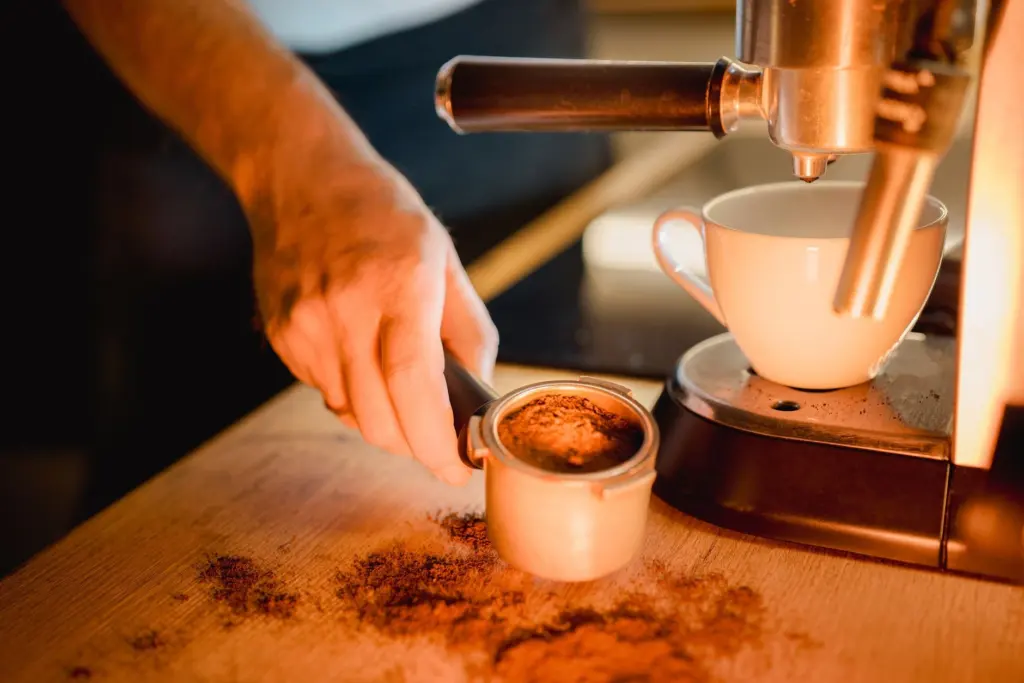
- Weigh the dose straight into the portafilter basket, using the dose that matches your basket.
- Level the grounds so the bed is even. An uneven bed lets water find a path of least resistance, which is called channeling and can lead to an under-extracted shot.
- Tamp level and straight down, with the same motion each time.
- Lock in the portafilter, set the cup on the scale, and start the pump and the timer together.
- Stop at the target yield and note the time.
- Taste, compare the time with the window, and change the grind in a small step before the next shot.
Fixing sour, bitter and weak shots
Read the clock first, then the cup. Time tells you which way to move the grinder, and taste confirms it. Change one setting per shot so the result is traceable.
- Fast and thin. If 30 g of liquid arrives before 25 seconds, the shot ran too fast, so make the grind finer. A shot that tastes sour and also ran quickly belongs in this group.
- Slow and clogged. If 30 g takes more than 30 seconds, make the grind coarser. A grind that is too fine can clog the filter and stop the flow altogether.
- Watery and bitter. A grind that is too coarse produces a watery, bitter cup, so the fix is not a stronger dose but a finer setting. Check the clock to confirm the shot ran fast.
- On time but harsh. When the shot pulls inside the target window yet tastes harsh, make the grind coarser and increase the dose. This is the one case where the clock looks fine but the cup does not.
- Uneven or patchy flow. Channeling can lead to an under-extracted shot, so re-level the bed and repeat your tamp before touching the grinder.
If you work out your equipment and ratios by weight here, the same habit carries over to immersion brewing. The French Press Coffee To Water Ratio: Exact Measurements For Rich, Balanced Coffee Every Time (2026 Guide) – Greatnorthernbrewing guide applies ratios to a different method, and How Much Coffee for Cold Brew? Exact Ratios, Batch Sizes, and Simple Tricks for 2026 – Greatnorthernbrewing does the same for batch brewing.
Frequently asked questions
What should I do about dose if my basket is smaller?
Another roaster’s guide suggests 6–8 g of ground beans per 1–1.5 fl oz for a single shot, and 15 g per 2 fl oz for a double. Those figures sit below the 18 g double-basket dose, so start from the recipe that matches your basket and let time and taste guide small changes.
When should I grind my espresso beans?
Grind just before brewing, and use the freshest beans you can. Espresso beans in a dark or espresso roast are the usual match for a fine setting.
What is crema, and does it prove a good shot?
Crema is a layer of smooth, tight bubbles on the espresso, and it forms when the grind, packing and portafilter pressure are right. It is a useful sign, but time, yield and taste still decide whether the shot is good.
Does cleaning the machine change the taste?
Yes. Oily residue compromises the taste of espresso, so keep the brewer clean.