| Factor | Matcha | Coffee | Planning use |
|---|---|---|---|
| Caffeine per serving | About 60 mg per 1 g (half a teaspoon) serving in one guide; another lists 25 mg per gram | Roughly 150 mg per standard cup; typically 65 mg per single espresso shot | Matcha is the lower-dose choice at a typical serving. Coffee suits the days you want a firmer dose. |
| Jitters | At a standard serving, much less likely to cause jitters; contains calming L-theanine | More likely to cause jitters than a standard serving of matcha | If caffeine makes you edgy, start with matcha and keep to a standard serving. |
| Antioxidant compounds | Exceptionally high in catechins, particularly EGCG | Rich in chlorogenic acids | Both supply antioxidants, but different ones. Choose on caffeine and taste rather than expecting identical benefits. |
| Amount used per serving | 1 g powder per bowl | About 5.5 g ground beans per 100 g brewed serving | Compare price per gram of each product to estimate cost per serving. |
These figures come from a tea producer’s matcha-versus-coffee guide and a matcha brand’s comparison page.
Matcha vs coffee is mostly a choice between smoother and stronger: matcha pairs less caffeine per serving with calming L-theanine, while coffee delivers more caffeine per cup. Pick matcha for calm focus or caffeine sensitivity, coffee when you need a strong wake-up.
This comparison sits inside our tea guides. If powdered tea is new to you, read how to how to brew loose leaf tea first, then come back here to settle on a dose.
Choosing by daily routine
The better drink depends on how you want the caffeine to arrive, how much you tolerate and what the next few hours demand. For even, jitter-free energy, matcha is the better fit, because tea producers explain that L-theanine paired with caffeine moderates the stimulant hit. For a firm push, coffee gives the larger dose.
- Hard start to the day: choose coffee. A standard cup holds roughly 150 mg of caffeine, although brew strength, bean type and serving size shift that figure.
- Long, quiet work block: choose matcha. Its calming compound is the reason it is described as a better match for sustained concentration than a strong coffee.
- Small, compact dose: a single espresso shot is typically 65 mg in a much smaller volume, which suits people who like coffee’s flavour but not a full mug.
- Budget-driven choice: look at the amount you use, not just the price on the tin or bag. A bowl of matcha takes a gram of powder, so a small tin can cover many servings.
- Ritual and taste: matcha is a whisked, vegetal green tea drink, while coffee offers a wide range of brew styles. If you will not enjoy the taste, the caffeine numbers do not matter.
Caffeine per serving and cost
Per serving, matcha is the lower-caffeine option. A standard matcha serving of half a teaspoon, about 1 g, contains about 60 mg of caffeine in one producer’s guide, while another brand’s comparison puts matcha at 25 mg per gram. Treat matcha as a range and let your own response set the scoop, not the label alone.
Coffee varies too. The roughly 150 mg per standard cup depends on brew strength, bean type and serving size, so a large, strong mug can run well above a small, mild one. Because matcha is drunk as a powder, caffeine rises with each extra gram you whisk in, so adding a larger scoop is a bigger change than it looks.
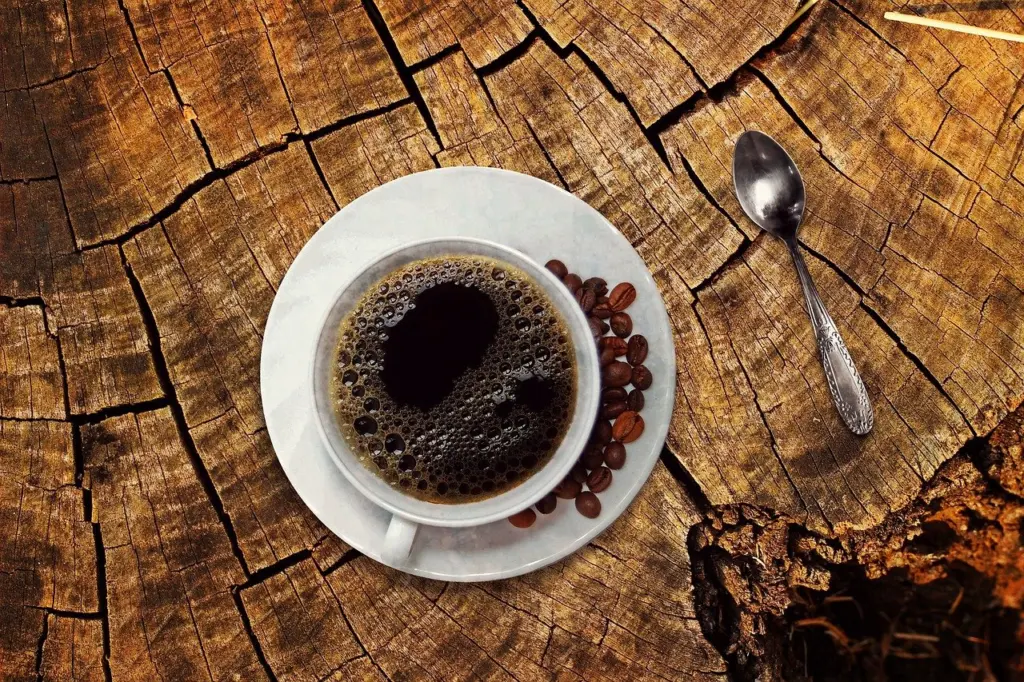
Cost per serving follows the amount you use. A bowl of matcha is made with 1 g of powder, while a coffee serving uses about 5.5 g of ground beans per 100 g of brewed coffee, according to a matcha brand’s comparison. Divide the price of whatever you buy by its weight rather than comparing bag against tin. If other teas are also in the running, Does Oolong Tea Have Caffeine? What The Numbers Mean In 2026 – Greatnorthernbrewing shows how to read tea caffeine figures.
Caffeine sensitivity and jitters
Matcha is the better choice for caffeine sensitivity. The producer guide states that matcha at a standard serving is genuinely much less likely to cause jitters than coffee, and the condition matters: it applies to a standard serving, not to a heaped scoop.
That gives a simple rule for anyone who tends to feel edgy after coffee. Start with a single 1 g serving and judge the effect before adding more. If you stay with coffee, a small format is gentler than a large mug, since the dose follows the volume and strength of the cup. A calming compound softens the stimulant but does not remove the caffeine itself, so matcha still counts as a caffeinated drink.
How L-theanine works
L-theanine has a calming effect on the brain, and in matcha it arrives together with caffeine. One brand’s explanation puts the division of labour simply: caffeine stimulates the senses, while L-theanine smooths out the jitters and anxiety caffeine may cause.
This pairing is what producers point to when they say matcha feels calmer than coffee, and it is why matcha is described as moderating the stimulant hit rather than weakening it. Coffee’s headline compound is caffeine, and its antioxidant profile centres on chlorogenic acids rather than a calming amino acid. The practical consequence is that matcha and coffee feel different even when the caffeine total is similar. Judge them by how you feel an hour in, not just by milligrams.
Antioxidants and nutrients
Both drinks contribute antioxidants, but from different families. Matcha is exceptionally high in catechins, particularly EGCG (epigallocatechin gallate), and its strong antioxidant content is led by EGCG. Coffee is rich in chlorogenic acids, according to the same tea producer’s guide.
Matcha also contains vitamins A, C, E and K, plus potassium and calcium. Those nutrients are a reason to choose matcha if you want more than caffeine from the cup, though neither drink should be treated as a supplement. If you want product-level nutrient numbers, USDA FoodData Central is USDA’s comprehensive source of food composition data, and its data are in the public domain.
Preparing each drink
Matcha is more sensitive to preparation than most drinks. Use 1 g of powder per bowl and water at 80°C, not boiling, then whisk until the powder is suspended. Matcha, including ceremonial grade matcha, is a finely ground powder made from shade-grown green tea leaves, so the same measured scoop and gentler water apply across grades.
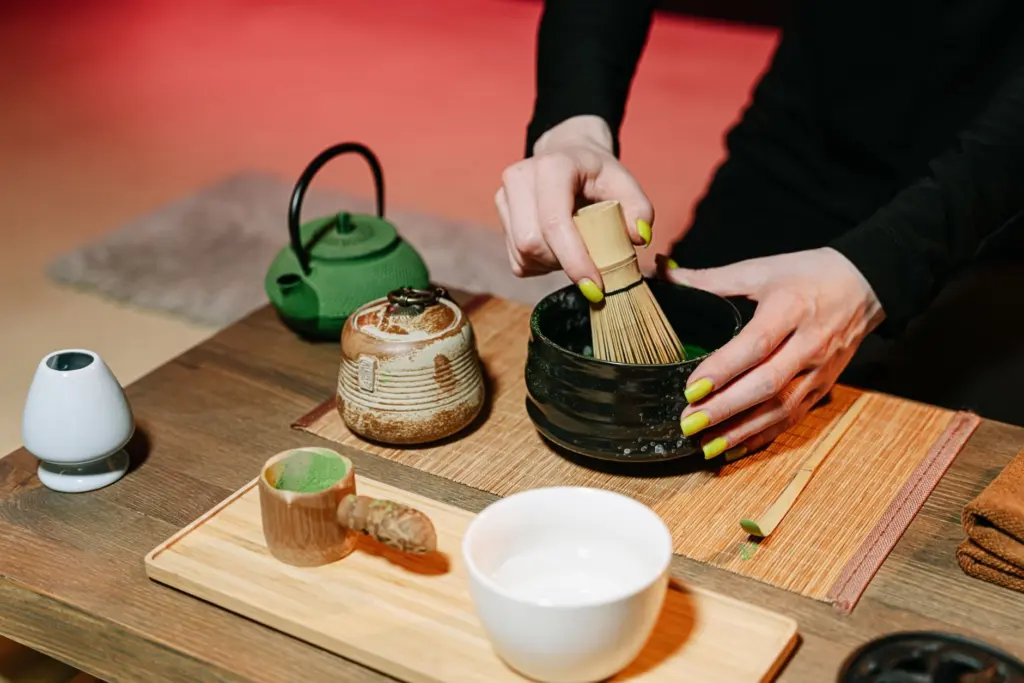
For coffee, think in weights. A serving of 100 g of brewed coffee uses about 5.5 g of ground beans, and measuring by weight keeps the strength, and the caffeine, predictable from cup to cup. If you later move to leaf tea instead of powder, How To Steep Loose-Leaf Tea Like A Pro: Simple Steps For Better Flavor Every Time (2026) – Greatnorthernbrewing covers the steeping steps.
Frequently asked questions
Does matcha have more caffeine than coffee?
Per gram, yes: one brand’s comparison puts matcha at 25 mg of caffeine per gram against about 7 mg per gram of beans brewed, which it describes as about 240% more per gram. Per typical serving, matcha usually delivers less, because a serving is only about 1 g.
What is matcha made from?
Matcha is a finely ground powder made from shade-grown green tea leaves. Because you drink the powder, you consume the entire leaf rather than steeping it and discarding it.
Are mushroom blends lower in caffeine?
One maker lists 30 mg of caffeine per serving for its mushroom matcha, which also includes L-theanine, and 48 mg for its mushroom coffee. These are blend products, so check the label of whichever you buy rather than assuming the same figures.
Which species supplies most of the world’s coffee?
Coffea arabica. About 60–80% of global coffee production comes from that single species, according to a matcha brand’s comparison page.