| Drink (8 oz cup) | Typical caffeine | Planning use |
|---|---|---|
| Oolong tea | 30 to 50 mg | A middle option for a daily cup when coffee feels too strong. Leaf amount, steep time and water heat move a cup within this range. |
| Black tea | 40 to 60 mg | Choose it when you want a firmer lift than oolong usually gives. |
| Green tea | 30 to 35 mg (Chinese), 25 to 30 mg (Japanese) | The lightest of the teas here. Japanese styles run lower than Chinese ones. |
| Brewed coffee | 80 to 100 mg on average | The highest figure per cup. Moving a coffee to oolong lowers what each cup delivers. |
These per-cup figures come from a tea-bag caffeine comparison and a tea basics guide, and they describe typical cups rather than guarantees.
Does oolong tea have caffeine? Yes: a typical 8 oz cup holds about 30 to 50 mg, less than black tea and coffee, more than green tea, and the amount shifts with how you brew it.
Brewing choices matter as much as tea type here, and the wider method is laid out in our guide on how to brew loose leaf tea.
Where oolong sits against black tea, green tea and coffee
Oolong has less caffeine than black tea but more than green tea, which makes it a sensible step down for someone leaving coffee behind. Measured on a smaller pour, the same pattern holds: about 16 mg in a 3.5 oz (100 ml) cup of oolong, roughly 12 mg for green tea and 42 mg for brewed coffee, according to the same tea-bag comparison. A separate guide puts an 8 oz cup of oolong anywhere from 16 mg to 55 mg, so the label “oolong” describes a spread of cups, not a single number.
That spread has a practical consequence. The ranges for oolong and black tea overlap, so a strongly brewed oolong can land where a weak black tea does. Thinking in milligrams per cup, rather than by the name of the drink, gives a more reliable picture of your day.
- Oolong instead of coffee: suits anyone who wants a gentler lift per cup. The per-cup figure is clearly lower, though several cups add up.
- Oolong instead of green tea: suits someone who finds green tea too light and wants a little more stimulation without moving to black tea.
- Black tea instead of oolong: suits a drinker who wants a stronger cup and does not mind a higher figure.
- Coffee as the baseline: if you are weighing coffee against another leaf-based option, Matcha Vs Coffee: Which Fuel Is Right For Your Energy, Focus, And Health In 2026? – Greatnorthernbrewing covers that comparison.
Matching a cup to your sleep and schedule
Oolong’s caffeine is not fixed for a pot of leaf; it falls with each infusion. Oolong leaf yields about 30 to 50 mg in the first cup, 15 to 25 mg in the second and 5 to 10 mg in the third. For anyone who notices caffeine affecting sleep, that taper is the most useful lever, because the same leaf can serve different times of day.
- Morning or focused work: drink the first infusion, where the leaf gives up the most caffeine.
- Afternoon: move to the second infusion, which delivers a noticeably smaller amount for the same leaf.
- Evening: save the third infusion or later, where the figure is lowest, or stop caffeinated tea earlier if you are sensitive.
- Replacing a late coffee: an afternoon coffee at 80 to 100 mg is a larger dose than an oolong at 30 to 50 mg, so the swap lowers each cup, as the comparison figures show.
Pick a style you will actually enjoy drinking at these times. What Does Oolong Tea Taste Like? The Complete Flavor Guide To Find Your Perfect Cup (2026) – Greatnorthernbrewing helps match a style to your preference before you build a routine around it.
Brewing variables you control
Three things move the caffeine in a cup: how hot the water is and how long the leaf steeps, how much leaf you use and how finely it is broken, and how young the leaf was when picked. The first two are entirely in your hands.
Water temperature and steep time
Hotter water and longer steeps pull out more caffeine. One tea-bag guide ties water near 200 F and steeps of 3 to 5 minutes to the higher extraction, and another oolong guide agrees that hotter water extracts more compounds from the leaf, caffeine included. Traditional oolong preparation already stays well below that long-steep end: water at 195 F (boiled, then cooled for 2 minutes) and steeps of 1 to 3 minutes each.
- To lower caffeine: let boiled water cool before pouring and keep each steep at the short end of that window.
- To raise it: use hotter water and leave the leaf longer, accepting a stronger and potentially more bitter cup.
Leaf quantity and size
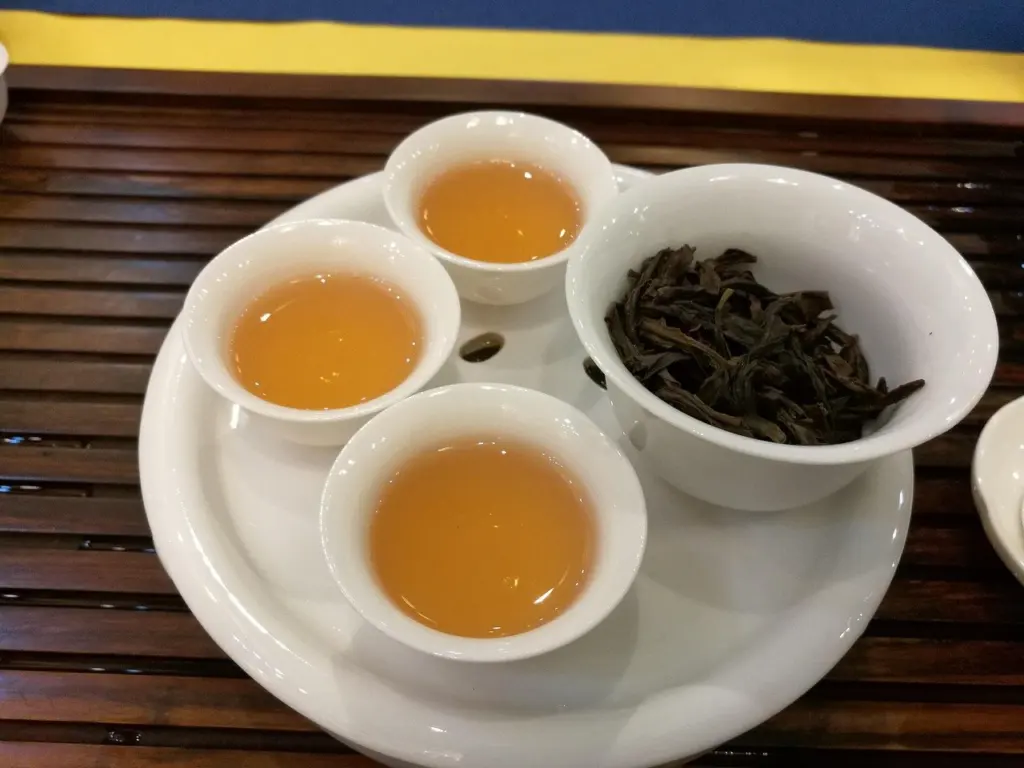
More leaf means more caffeine. A standard tea bag uses about 2 g of tea for 8 oz of water, whereas gongfu brewing packs 5 to 8 g into just 3 to 4 oz for a concentrated infusion. A typical guideline of about 5 g of leaves per cup sits between the two. Breaking the leaves increases surface area and allows faster extraction, so whole leaves release their caffeine more slowly.
- For a lighter cup: measure a smaller amount of whole leaf into a full-size mug and keep the steep short.
- For a stronger cup: add leaf rather than relying only on a long steep, which keeps the flavour from tipping toward bitterness.
- For gongfu sessions: the heavy leaf ratio gives a concentrated pour, so spread the session across the infusions and treat the later ones as the milder cups.
Leaf age
The younger and more tender the leaves, the more caffeine they tend to produce, according to Nio Teas. You cannot change this at the kettle, but you can use it when choosing: treat a tea made from tender young leaf as the stronger candidate, and keep it for the earlier part of the day.
Frequently asked questions
Do oolong tea bags have less caffeine than loose leaf?
They can. Bags often contain smaller, broken leaves, and a smaller leaf mass per bag may lower caffeine, but broken leaf also extracts faster, so brewing time still matters.
Does roasting change the caffeine in oolong?
Roasting can slightly lower caffeine, according to Nio Teas. The effect is small, so brewing choices are the more dependable way to adjust a cup.
Can a strong cup of oolong match black tea?
It can come close, because the typical ranges overlap: oolong runs 30 to 50 mg per 8 oz cup and black tea 40 to 60 mg, based on the tea-bag comparison. A generous measure of leaf with a long steep pushes oolong toward the top of its range.
How many infusions can oolong leaves give?
Oolong may be infused 3 to 7 infusions, 1 to 3 minutes each. Each pour is milder than the last, so one measure of leaf can supply cups of different strengths.