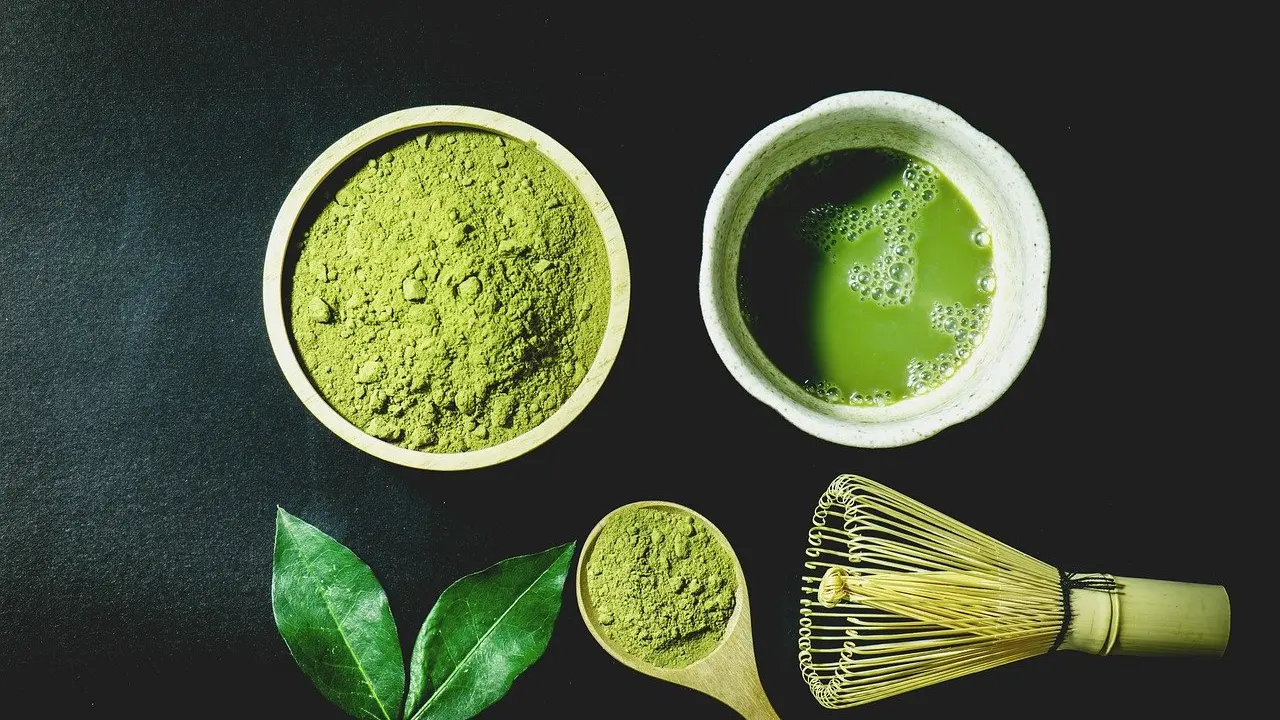
Matcha is whisked rather than steeped. To make matcha at home, sift about 1.5 level teaspoons into a bowl, add 80°C (176°F) water and whisk until frothy, following Ippodo’s latte recipe.
The right amounts depend on cup size and whether milk or ice is going in. Because matcha is a powder you whisk into water, it behaves differently from leaf tea, so for those teas see how to how to brew loose leaf tea.
Matcha myths, corrected
Most disappointing first cups trace back to a handful of assumptions: that hotter water is better, that only a bamboo whisk will do, that any green powder is interchangeable, and that special measuring tools are required. Each has a more forgiving answer, and the table below sets them side by side so you can decide what is worth buying and what you can skip.
| Common belief | What works instead | Planning use |
|---|---|---|
| Hotter water extracts more flavour. | Use hot but not boiling water. Junbi’s guide gives about 175°F for hot matcha, and Preppy Kitchen names 180°F as the temperature at which the powder disperses and gives its best flavour. | Let the kettle settle after boiling and aim for the 175°F to 180°F band. |
| A bamboo whisk (chasen) is compulsory. | The chasen adds frothiness and foam and is the best tool for mixing without lumps. An electric milk frother or a mini whisk is the suggested substitute. | Buy a chasen if you drink matcha daily; otherwise a frother covers you. |
| Any matcha is as good as any other. | Ceremonial grade is smooth, nutty and earthy. Culinary grade is a lower grade, duller yellow-brown, more bitter and typically used for baking. | Buy ceremonial grade for plain bowls; keep culinary for baking. |
| You need a bamboo scoop to measure. | A teaspoon can replace the bamboo scoop. | Measure with a standard teaspoon and keep it consistent between cups. |
The table draws on Junbi’s guide to making matcha at home and Preppy Kitchen’s iced matcha latte recipe.
If your kettle runs hotter than you want, Ippodo’s method is to pour boiling water into a teacup first to cool it, then use that water for the matcha. This is a simple fix that needs no thermometer or special kettle.
Quantities and water temperature
There is no single correct ratio. The published recipes differ because they make different drinks: a large, drinkable cup, or a small strong base meant to be diluted with milk or ice. Pick the pattern that matches what you plan to pour it into.
- Straight hot cup: Junbi whisks 1 tsp of matcha with 8 oz of hot water, not boiling, best at 175°F. This is the easiest ratio for a plain mug-sized drink.
- Latte base: Ippodo sifts 3 g (0.11 oz) of matcha, about 1.5 level teaspoons, and adds 100 mL (3.4 oz) of water at 80°C (176°F).
- Iced base: Matcha Matcha uses 3 g of matcha with 60 ml of hot water at 80°C, whisked until frothy. Preppy Kitchen starts from 1 teaspoon of powder with 3 tablespoons of hot water.
Across these sources the hot-water target sits between 175°F and 180°F, or 80°C, and the common ceiling is simply that the water should not be boiling. Treat that as a working window rather than an exact setting. If a cup tastes harsh, the first thing to change is the water temperature, not the amount of powder.
For a first attempt, the straight hot ratio is the safest place to start, because the larger volume of water is more forgiving of small measuring errors. Once you know how that cup tastes, move to the smaller, stronger ratios for milk drinks.
Tools: chawan, chasen and sifter
The traditional kit is short, and each piece does one job. You can start with part of it, but knowing what each item contributes helps you decide where a substitute is acceptable.
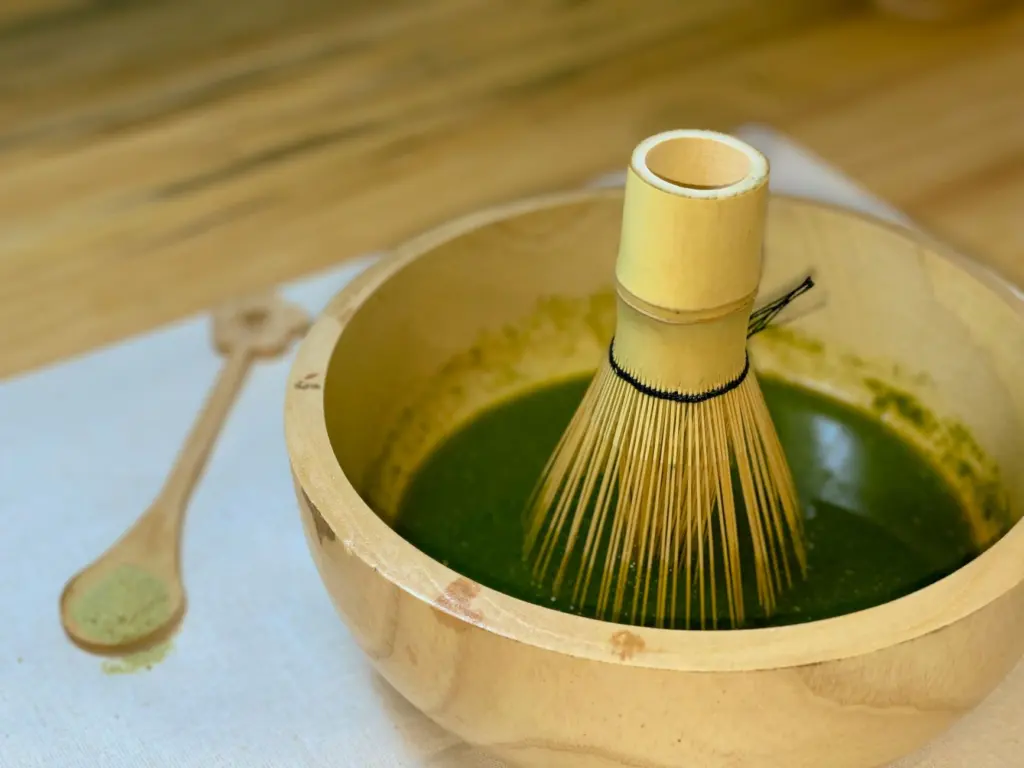
- Chawan (bowl): Junbi describes its ceramic matcha bowl as having a wide bottom and high walls, which gives the whisk room to move without splashing. Whatever bowl you use, choose one with similar room.
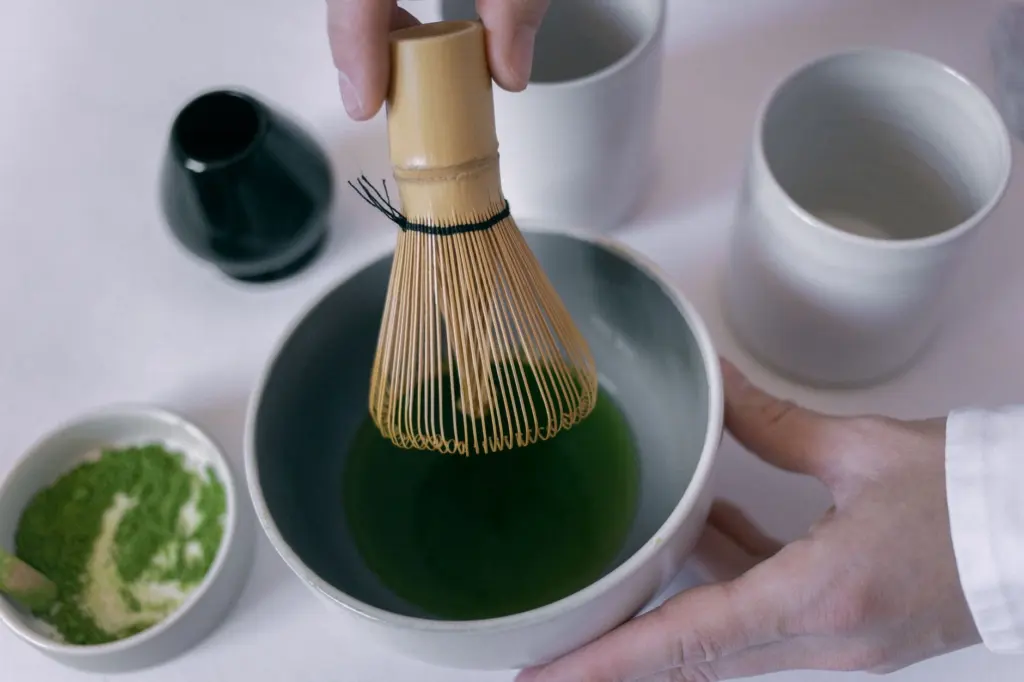
- Chasen (bamboo whisk): The chasen is what turns the powder and water into a frothy, foamy cup, and Preppy Kitchen calls it the best tool for whisking without lumps.
- Sifter: Ippodo’s recipe sifts the matcha before adding water, and the five-step method from Pure Matcha also lists sifting alongside water temperature and the W-motion froth. Treat sifting as a standard step, not an optional extra.
Whisking step by step
The method below follows Ippodo’s recipe, with Pure Matcha’s description of the froth motion as a cross-check. It makes a single bowl and takes only a few minutes once the water is ready.
- Prepare the water. Heat water, then let it cool to about 80°C (176°F). Pouring boiling water into a teacup first is a simple way to bring it down.
- Sift the powder. Sift matcha into the bowl. Ippodo uses 3 g, about 1.5 level teaspoons, for its latte base; Junbi uses 1 teaspoon for a larger straight cup.
- Add the water. Pour in the hot water, using the ratio that suits your drink from the section above.
- Whisk with intent. Whisk vigorously for 15 seconds in an “M” shape, as Ippodo describes. Pure Matcha describes the same idea as a W-motion; the point is a quick zigzag rather than slow circles.
- Serve or build. Drink the bowl as it is, or pour it over milk or ice for the variations below.
If clumps remain after whisking, return to the sifting step next time rather than whisking for longer. Powder that has been through a sifter disperses more easily, which is why the step appears in Ippodo’s recipe.
Making matcha without a whisk
Yes, you can make matcha without a whisk, and the substitutes are well supported. The trade-off is that you give up some of the foam a chasen produces, so choose based on how often you drink it.
- Electric whisk: Junbi calls its battery-operated electric whisk a great alternative to the bamboo whisk. It suits people who drink matcha most days and want fast, repeatable results.
- Milk frother or mini whisk: Preppy Kitchen says to use an electric milk frother or a mini whisk if you do not have a bamboo whisk. A frother is the cheapest option if you already make milky drinks.
- Teaspoon for measuring: If you lack a bamboo scoop, a teaspoon does the same job, as covered in the table above.
Whichever tool you use, keep the rest of the method unchanged: sift the powder, use water that is hot but not boiling, and keep the ratio consistent. Those steps do more for the cup than the whisk does, and Preppy Kitchen still names the chasen as the best tool for avoiding lumps, so expect to sift more carefully when you improvise.
Cold and milk-based variations
Matcha adapts to cold and milk drinks with small changes to the base. The reliable approach is to make the concentrated base first, then add milk or ice.
For a latte, whisk the 3 g and 100 mL base from Ippodo’s recipe and combine it with milk. For an iced version, the 3 g and 60 ml base from Matcha Matcha is whisked until frothy and poured over ice, while Preppy Kitchen’s recipe pairs 1 teaspoon of powder with 3 tablespoons of hot water and 3 tablespoons of ice water. The full method for the cold milky version is in How To Make The Perfect Iced Matcha Latte: Quick, Creamy, And Refreshing (2026) – Greatnorthernbrewing.
When milk and ice are in the glass, a strong base stops the matcha tasting thin. That is why these recipes use smaller volumes of water than the straight cup does.
More tea projects at home
Once matcha feels routine, a different style of home tea making is a natural next step. How To Make Perfect Kombucha At Home: A Simple Step-By-Step Recipe For Beginners (2026) – Greatnorthernbrewing covers a very different, fermented approach.
Frequently asked questions
| Question | Answer |
|---|---|
| How can I tell ceremonial from culinary grade? | Preppy Kitchen describes ceremonial grade as vivid green with a smooth, nutty, earthy flavour, while Junbi says culinary matcha tends to look duller and more yellow-brown. Colour is a quick first check before you buy. |
| How do I make a cold cup without milk? | Junbi whisks 1 tsp of matcha with 12 oz of cold water, then adds ice. It is the simplest cold version and needs no hot water. |
| Should I whisk in an M or a W shape? | Ippodo describes whisking vigorously for 15 seconds in an “M” shape, while Pure Matcha refers to a W-motion. |