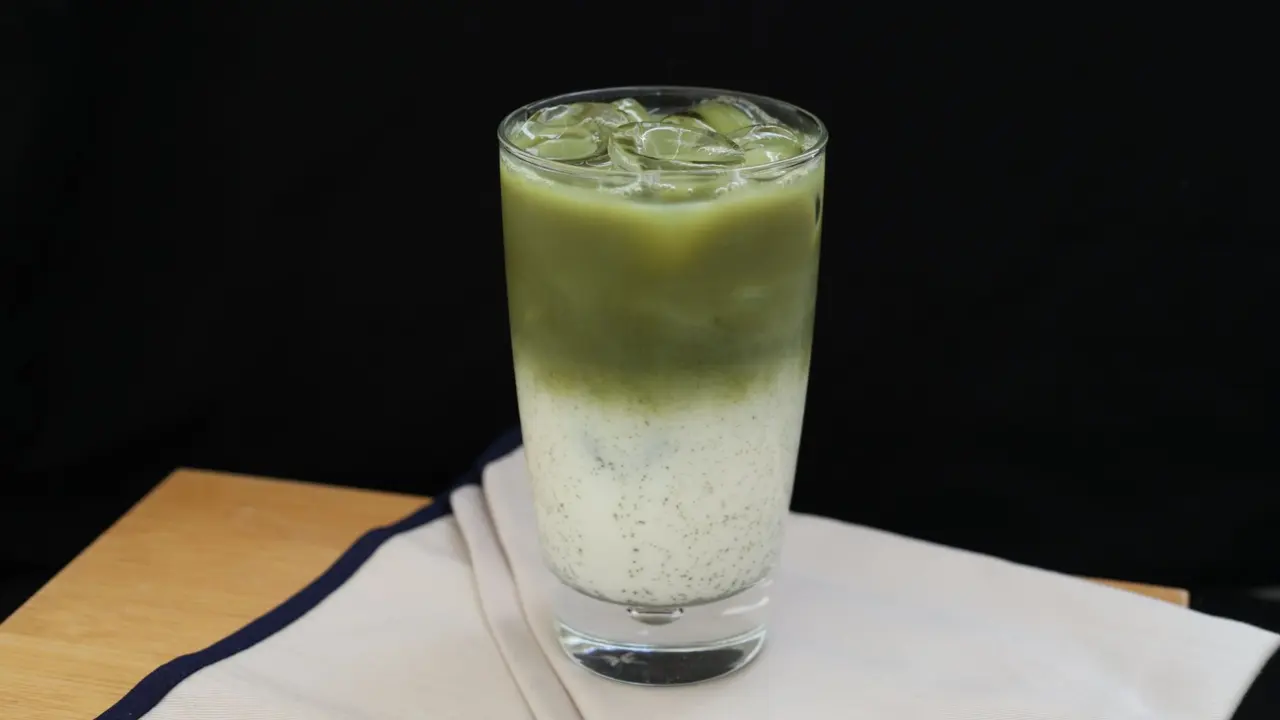
Here is how to make a matcha latte iced: whisk 1 scoop of matcha (roughly 1–2 g) with 100 ml of 80°C water, pour it over ice, add sweetener, then top with 150 ml cold milk.
The method suits anyone with a bowl and a whisk. Matcha behaves differently from steeped leaves, so it helps to compare it with our guide on how to brew loose leaf tea. The sections below explain why each step exists, so you can fix a clumpy or bitter glass yourself.
Why the method works
An iced matcha latte depends on dissolving powder fully before anything cold touches it. Matcha is made from whole, stone-ground tea leaves rather than steeped ones, so you drink the leaf itself. Powder that is not broken up properly stays in lumps, and lumps taste harsh and look unappealing.
Three causes drive most results, and each one points to a practical decision.
- Water just below boiling. Producer guidance from The Whistling Kettle is to whisk matcha with water heated to about 175°F (80°C), and it warns that hotter water can make the tea taste bitter. If your kettle only boils, give the water a moment off the heat before pouring. A kettle that lets you choose a temperature takes the guesswork out; see our guide to the best kettle for tea.
- A strong whisk before the ice. T2 explains that whisking it strong is what stops the flavour disappearing once ice and cold milk go in. The matcha is a concentrated base; milk and ice only thin it.
- Ice and milk added last. Cold ingredients make a lump-free powder harder to achieve, so they belong at the end of the process, not the start.
With those three points in mind, the quantities below make more sense.
Quantities at a glance
The table gives the working recipe for one tall glass. Treat the matcha range as the one flexible figure: start at the lower end for a milder drink and increase it if the matcha taste gets lost under the milk.
| Element | Amount and condition | Planning use |
|---|---|---|
| Matcha | 1 scoop, roughly 1–2 g | The only quantity worth adjusting for strength. |
| Hot water | 100 ml at 80°C | Enough to make a paste-like, whiskable base without scalding the powder. |
| Water temperature | About 175°F (80°C), just below boiling | Hotter water can turn the drink bitter. |
| Whisking | At least 20 seconds with quick back-and-forth wrist movements | Use time as a minimum and look for a froth with no lumps. |
| Cold milk | 150 ml of your choice | Any milk works; choose by taste and creaminess. |
Quantities and whisking time follow T2’s iced matcha guide, and the temperature matches The Whistling Kettle’s matcha preparation.
Tools and matcha choice
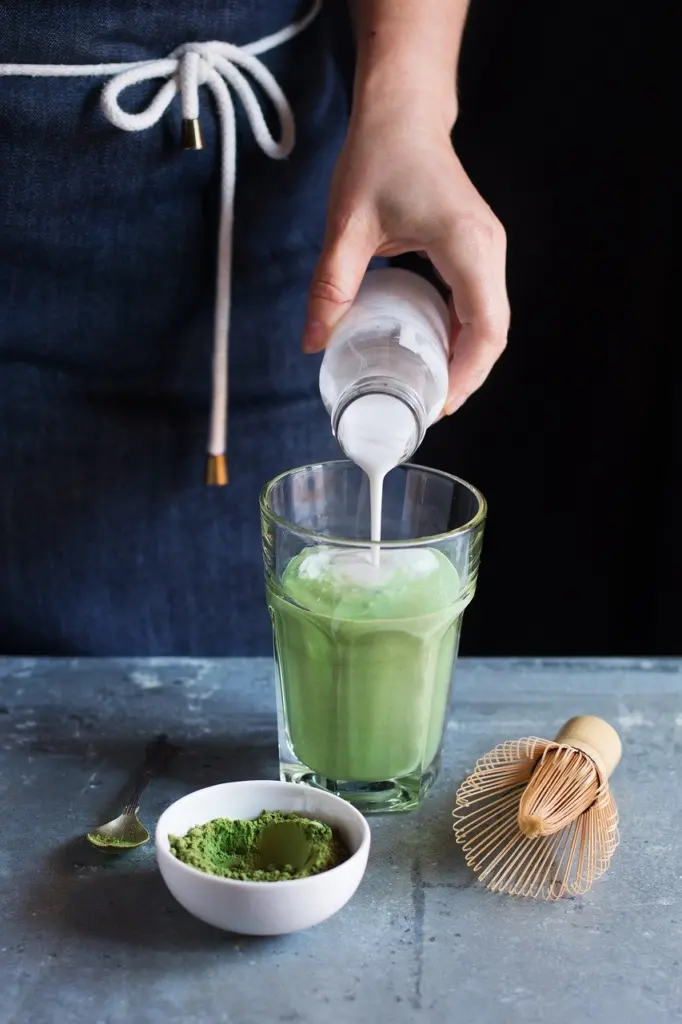
T2 lists a bamboo scoop, a matcha bowl, a matcha whisk (chasen), a fine-mesh sieve and a tall glass. None is exotic, and the sieve and whisk do the most to determine whether the drink comes out smooth.
Bamboo whisk or milk frother
The Whistling Kettle says a bamboo whisk will give you the smoothest, most authentic results compared with alternatives. A milk frother can stand in, but expect a slightly less even froth and check carefully for lumps. If you make matcha often, the bamboo whisk is the one tool worth buying.
Matcha grade
For lattes, ceremonial grade is the safer choice. The Whistling Kettle describes premium ceremonial matcha as made from the youngest, shade-grown tencha leaves and finely stone-ground into an ultra-smooth powder, which suits a drink where the matcha has to hold its own against milk. The food blog I Am a Food Blog also reports that it usually uses ceremonial grade in lattes.
Step-by-step method
Work in this order. Each step protects the one that follows it.
- Sift the matcha. If you have a small sieve, sift the powder into the bowl first; T2 notes this prevents clumping.
- Measure the matcha. Use 1 scoop, roughly 1–2 g. The Whistling Kettle says one scoop weighs a little under 1 g on average, so a scoop is a convenient measure, though it weighs slightly less than that range.
- Add the hot water. Pour in 100 ml of 80°C water.
- Whisk with your wrist. Use quick back-and-forth movements for at least 20 seconds. A “W” or “M” motion works, and the endpoint is a froth with fine bubbles and no visible lumps. Another recipe from Jessica in the Kitchen gives at least 15 seconds or until no clumps remain, so go by the lumps rather than the clock.
- Assemble in a tall glass. Pour the matcha over ice, add your sweetener, then top with 150 ml cold milk, following T2’s order.
Stir gently before the first sip so the sweetener and milk reach the matcha at the bottom.
Milk, ice and sweetness
The quantity of milk is fixed at 150 ml in the main recipe, but the type is open. Use milk of your choice, and pick by texture and flavour rather than a rule.
Choosing a milk
Oat milk is a dependable dairy-free pick. I Am a Food Blog says the nuttiness of oat milk pairs very nicely with matcha, as do other plant-based milks. If you already drink dairy milk, use that; the matcha base is strong enough to carry either.
Choosing ice
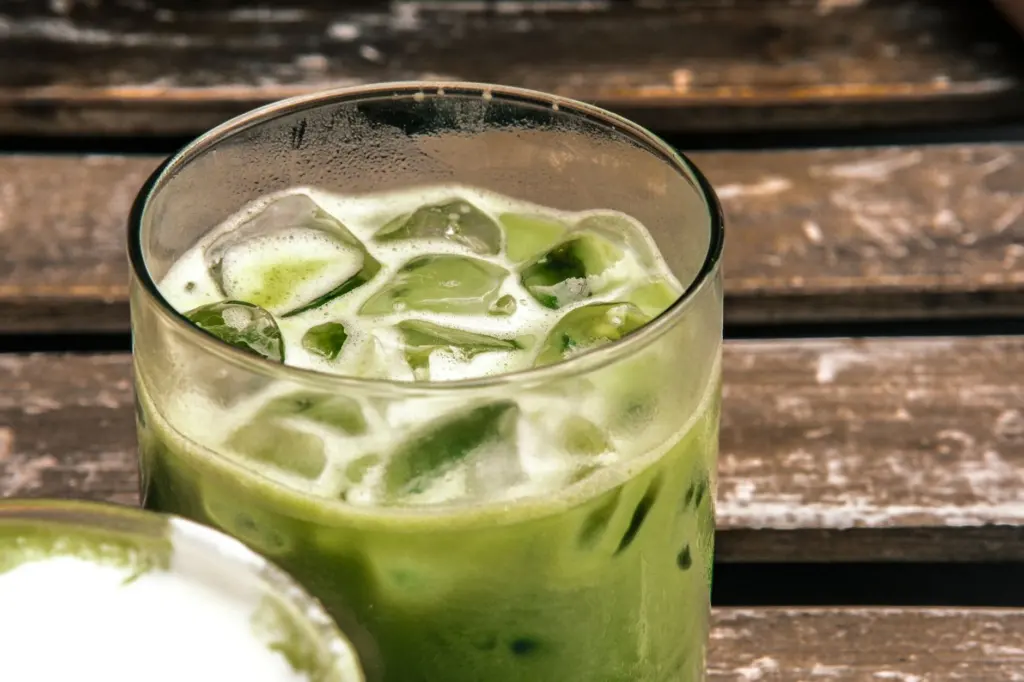
Ice size changes how concentrated the drink tastes. The same blog suggests a large ice cube if you like your lattes strong and concentrated, and warns that crushed or nugget ice will make the latte taste more watered down. A large cube melts slowly, so it suits a drink you plan to sip over a longer time.
Fixing clumps, bitterness and a weak taste
Most problems trace back to one of the three causes explained earlier: temperature, whisking or dilution.
- Clumps. Sift the powder before adding water, and keep whisking until the froth has fine bubbles and no visible lumps. Lumps that survive the whisk will not dissolve in cold milk, so fix them before assembly.
- Bitterness. Check the water first. Hotter water than 175°F can make matcha bitter. Jessica in the Kitchen puts the best temperature slightly higher, at 180°F, so aim for that narrow band just below boiling and do not pour straight from a rolling boil.
- A weak, watery latte. Whisk harder before the ice goes in, since strong whisking is what keeps the flavour through ice and cold milk. Then switch from crushed ice to a large cube.
- Weak colour or flat taste despite good technique. Move toward the upper end of the matcha range rather than adding more milk.
If you want to see how matcha is prepared beyond the iced latte, How To Make Matcha At Home: Simple Steps, Tips, And Variations (2026 Guide) – Greatnorthernbrewing covers the wider routine.
Frequently asked questions
Which matcha grade is best for an iced latte?
Ceremonial grade is the better fit for lattes, because its finely ground, shade-grown leaf makes a smoother base. Jessica in the Kitchen says culinary-grade matcha is better saved for baking and cooking.
How do I avoid clumps if I have no bamboo whisk?
Add a small amount of water to the powder first, whisk it smooth, then add the rest, as Jessica in the Kitchen suggests. A milk frother can replace the whisk, though a bamboo whisk gives the smoothest result.
Can I make an iced matcha latte ahead and store it?
It is better served straight away. Over time the ice cubes slowly melt and water the drink down, so a finished latte over ice loses its flavour within about a day.