| Feature of matcha | What is supported | Planning use |
|---|---|---|
| Whole-leaf powder | The powder contains all parts of the leaf; the matcha analysed had 56.1 g/100 g total fibre and 17.3 g/100 g protein | Treat matcha as an ingredient you swallow, not a leaf you discard. Its character comes from the leaf itself. |
| Shading for about 3 weeks | Higher theanine and caffeine, lower catechins, intense green colour | Pick properly shaded matcha if you want to drink it plain and smooth. |
| Caffeine | 2213.492 µg/g in dry matcha | Count matcha as a caffeinated drink and keep it out of the evening if caffeine keeps you awake. |
| Grade | Ceremonial is made from the first harvest and is the greenest; culinary is the lowest grade and extremely bitter drunk straight | Whisk higher grades with water; keep culinary grade for blending into other ingredients. |
Figures come from a peer-reviewed analysis of matcha and a tea producer’s grade guide.
So, what is matcha made of? It is the whole leaf of the Camellia sinensis tea plant, shaded before harvest, steamed, dried into tencha and stone-ground. Shading and grade decide how sweet or bitter it tastes.
If you mostly drink steeped tea, our guide on how to brew loose leaf tea covers that side of the tea shelf. This page covers what goes into the powder and what that means when you buy it.
Whole-leaf powder and what it means for your cup
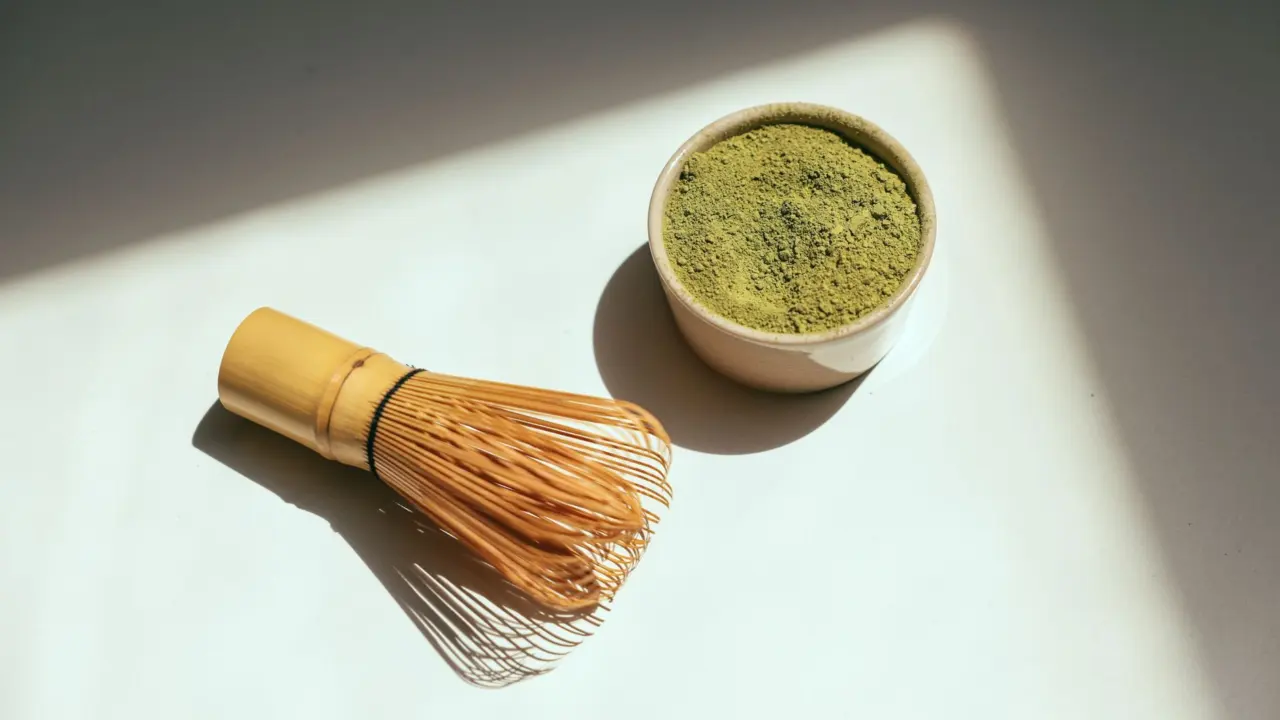
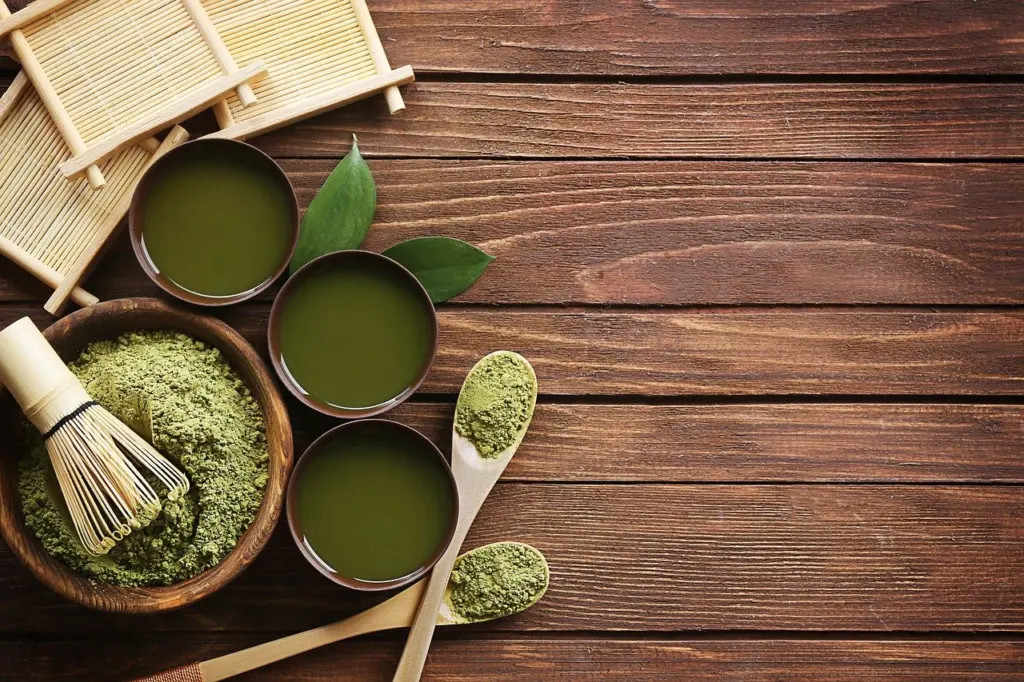
Matcha is a variety of tencha green tea, and tencha comes from Camellia sinensis, the same species behind other green teas. Unlike most tea types, matcha is consumed as a powder containing all parts of the leaf. You drink the leaf, not an infusion of it. That is why its composition looks more like a food ingredient than a typical tea.
In the matcha analysed in that study, total fibre was 56.1 g/100 g (52.8 insoluble and 3.3 soluble), total protein was 17.3 g/100 g, and total fat was 7.285 g/100 g. Caffeine in dry matcha measured 2213.492 µg/g, and gallic acid was the most abundant phenolic acid measured.
These facts lead to a few practical choices:
- If you are watching caffeine: the caffeine figure is for the dry powder you whisk into the cup, so plan matcha as a caffeinated drink. Our guide, Drinking Green Tea: A Practical Guide To Benefits, Brewing, Dosage, And Safety (2026) – Greatnorthernbrewing, covers dosage and safety for green tea more broadly.
- If you want a smooth, sweeter cup: look for matcha made from shaded leaves. Shading is responsible for matcha’s unique flavour, while full-sun teas are more bitter because of their catechin content.
- If you want a clean powder: producers de-stem and devein the leaves before stone-grinding, so good matcha is made mostly of leaf blade.
- If you plan to mix it into other ingredients: a lower grade can do the job, because its bitterness is less of a problem once blended.
Choosing a matcha grade
Grade names describe harvest timing, shading and how the powder is meant to be used. Producers do not define them identically, so treat the label as a starting point.
- Ceremonial grade: the highest grade. It is made from the first harvest of the matcha plants and has the greenest colour. It suits drinking whisked with water, where bitterness has nowhere to hide.
- Latte grade: definitions split here. One producer says latte grade might be made from later harvests, not shaded for as long, with stems possibly remaining. Another describes latte grade as first-harvest. Read the product description for harvest and shading details before assuming either.
- Culinary grade: the lowest grade, and drinking it straight will result in an extremely bitter taste. Another producer notes that culinary matcha is often made of premium second-harvest leaves. It suits baking, smoothies and anything with milk or sweetener.
Buy the grade for the job: a pricier first-harvest powder gives the most for a plain bowl, while a cheaper culinary tin makes more sense for cooking. The next section explains why shading drives so much of that difference.
Why matcha is shaded
Matcha is shaded because shade changes the leaf’s chemistry and appearance in ways that make the powder sweeter and greener. Producers cover the plants under canopies for about 3 weeks before harvest. One producer describes the leaves as shade-grown and harvested within 3-4 weeks, so the exact period varies by producer.
The research describes an increase in theanine and caffeine content and a decrease in catechins. Catechins add to bitterness in full-sun teas, so lowering them is a large part of why shaded leaves taste milder. Shading also raises chlorophyll production, which gives matcha its brighter green colouring.
The practical result is that colour is a useful clue. A vivid green powder points to well-shaded, carefully made leaf, while a duller one is worth questioning before you buy.
From leaf to powder: the process step by step
Leaf-to-powder processing is a short, specific sequence, and it is what makes tencha different from other green teas. Matcha is primarily grown in Japan, in Uji in Kyoto and Nishio in Aichi prefecture.
- Shade the plants. Canopies go over the tea bushes for about 3 weeks before harvest.
- Hand-pick the leaves. For quality matcha, only the best and brightest young shade-grown leaves are hand-picked.
- Steam them quickly. The leaves are steamed within hours of being plucked, which halts oxidation.
- Dry them flat. The leaves are laid flat to dry until they become tencha.
- Remove stems and veins. The leaves are de-stemmed and deveined, leaving only leaf material for grinding.
- Grind in a stone mill. The tencha leaves are ground into a fine powder in a large granite mill.
- Sift the powder. The ground leaf is sifted through a sifter or fine-mesh strainer to separate the particles.
Because the leaf is dried flat rather than rolled, tencha stays suited to grinding, and the powder keeps the whole leaf. If you want a tea-style drink with a very different flavour, How To Make Refreshing Hibiscus Tea At Home (Simple Hot Or Iced Recipe) – Greatnorthernbrewing offers a simple hot or iced recipe.
Frequently asked questions
Where is matcha mainly grown?
Matcha is primarily grown in Japan, in the Uji area of Kyoto and in Nishio in Aichi prefecture, according to a matcha producer’s guide.
How is matcha different from steeped green tea?
Matcha is a powdered form of Camellia sinensis green tea, and you consume the whole leaf powder. With steeped tea you drink only the infusion and discard the leaves.
Which phenolic acid is most abundant in matcha?
In the matcha analysed in a published study, gallic acid was the phenolic acid measured at the highest level, at 252.3755 µg/g.
Is matcha just ground tea leaves?
Yes, with conditions. Dried tencha leaves are ground into powder, but the leaves are first shaded, steamed, dried flat and stripped of stems and veins.