Standing at the shelf comparing matcha vs green tea? Matcha is shade-grown green tea ground to powder and drunk whole, so it delivers more caffeine per serving than steeped green tea, which is strained out.
The difference lies in how the leaf is grown, processed and prepared, not in two unrelated plants. If you want the leaf-tea technique first, read our guide on how to brew loose leaf tea, then decide whether a whisked bowl suits you better.
Where matcha and green tea actually differ
A common assumption is that matcha is a separate drink from green tea. It is not. Matcha is a powdered type of Japanese green tea made from the Tencha variety of Camellia sinensis. What sets it apart begins in the field. The same review describes tea bushes covered with bamboo mats for most of the growth period to shade the leaves from direct sunlight. A tea producer describes shade cloth going over the plants for roughly the last three to four weeks before harvest. Descriptions of the shading period differ, so treat it as a range of practice rather than one fixed rule.
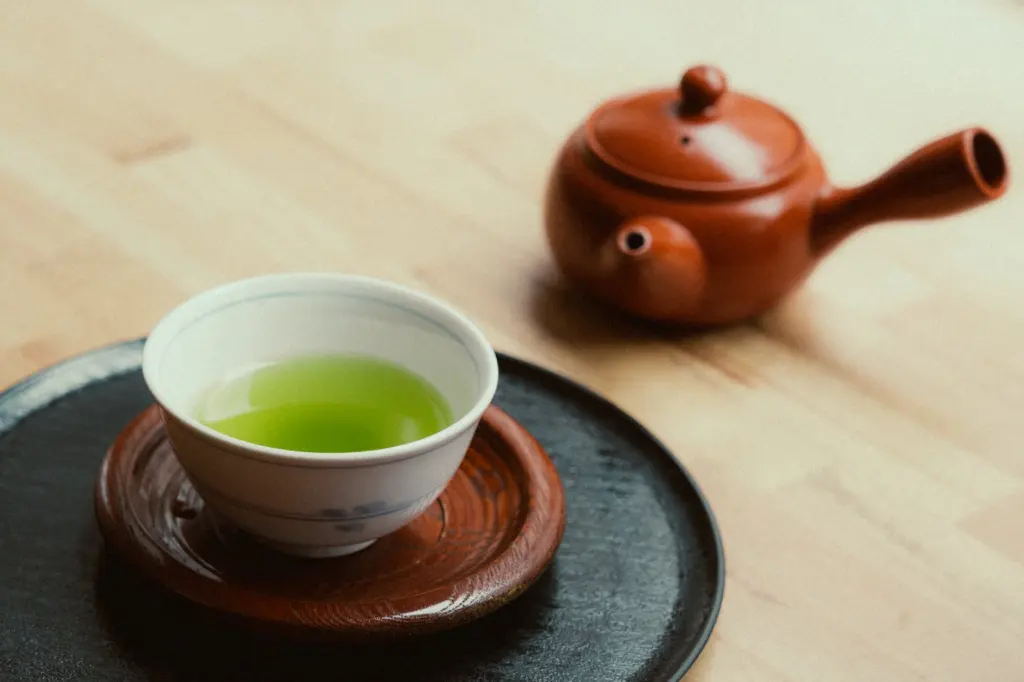
After harvest, the leaf is stone-ground into a fine powder that you whisk and drink whole. Ordinary green tea stays as loose leaf that is steeped and strained. That last step changes the cup more than anything else, because with matcha nothing is left behind in a strainer.
| Feature | Matcha | Green tea | What it means for you |
|---|---|---|---|
| Form | Shade-grown leaf, stone-ground into a fine powder | Loose leaf | Matcha needs a whisk and bowl; leaf tea needs a vessel to steep in and a way to strain. |
| Preparation | Whisked directly into water to make a suspension and micro-foam; not steeped | Steeped, then strained | Matcha takes active effort; leaf tea mostly takes waiting. |
| What you swallow | The whole leaf, drunk whole | The infusion only | This is why matcha’s per-serving numbers run higher. |
| Typical serving | About 2 g powder in 70–80 ml water, whisked to a fine foam | A standard cup of steeped leaf | Matcha servings are small in volume and concentrated. |
| Caffeine per serving | Higher | Lower | Choose by how much stimulation you want. |
The comparison draws on a tea-producer comparison and a second producer guide covering preparation and serving size.
Caffeine and L-theanine: what a serving delivers
Matcha carries more caffeine than steeped green tea per serving. One tea producer puts a serving of matcha at about 60 to 70 mg and a standard cup of green tea at about 25 to 50 mg. Another gives 60–80 mg for about 2 g of powder against 25–40 mg for a steeped cup. The exact figures differ, but both place matcha well above a steeped cup. Treat them as typical retail guidance, not as a ceiling or a target.
- Myth: they are about the same. Not per serving. If you swap a cup of green tea for a bowl of matcha one for one, expect a clearly larger caffeine dose.
- Myth: more caffeine means a harsher jolt. Both teas also contain L-theanine, an amino acid that softens caffeine’s intensity. That is a qualitative description. It explains why matcha can feel smooth, but it does not remove the caffeine from the dose.
- Myth: switching to green tea solves a caffeine problem. A steeped cup is lower per serving, which makes it the gentler starting point if you are sensitive to caffeine. It is still a caffeinated tea, so size and number of cups matter.
Matcha suits a morning when you want a stronger lift in a small volume. Green tea suits an afternoon cup, or any time you want to keep drinking over a longer stretch without a large single dose.
Antioxidants: concentrated in matcha, present in both
Green tea is not a weak antioxidant source that matcha rescues. The review in the National Library of Medicine’s PMC archive notes that polyphenols can account for as much as 30% of the dry weight of green tea. The same review calls matcha the best condensed source of green tea catechins, including EGCG, and cites a study that found total polyphenols in matcha of 169–273 mg GAE/g.
The reason matcha is so concentrated is simple. You consume the leaf itself, so none of its catechins stay behind in a strainer. Steeping only moves part of the leaf’s contents into the water. If your goal is the densest catechin intake per serving, matcha is the logical pick. If you already drink green tea regularly, you are not missing out on antioxidants, only on the whole-leaf concentration.
These figures describe what is in the tea, not what it does in your body. Use them to compare the two drinks on composition, and choose on taste, caffeine and routine rather than expecting a guaranteed health result from either.
Preparing each one
Whisking matcha
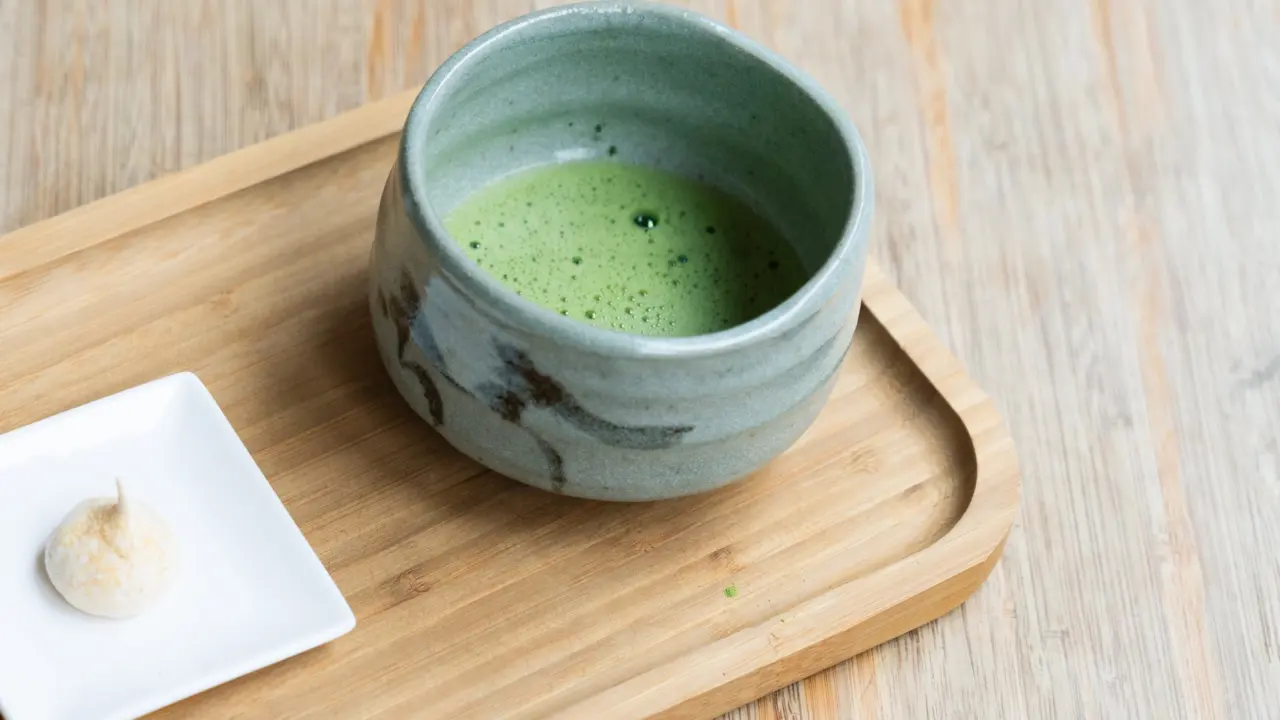
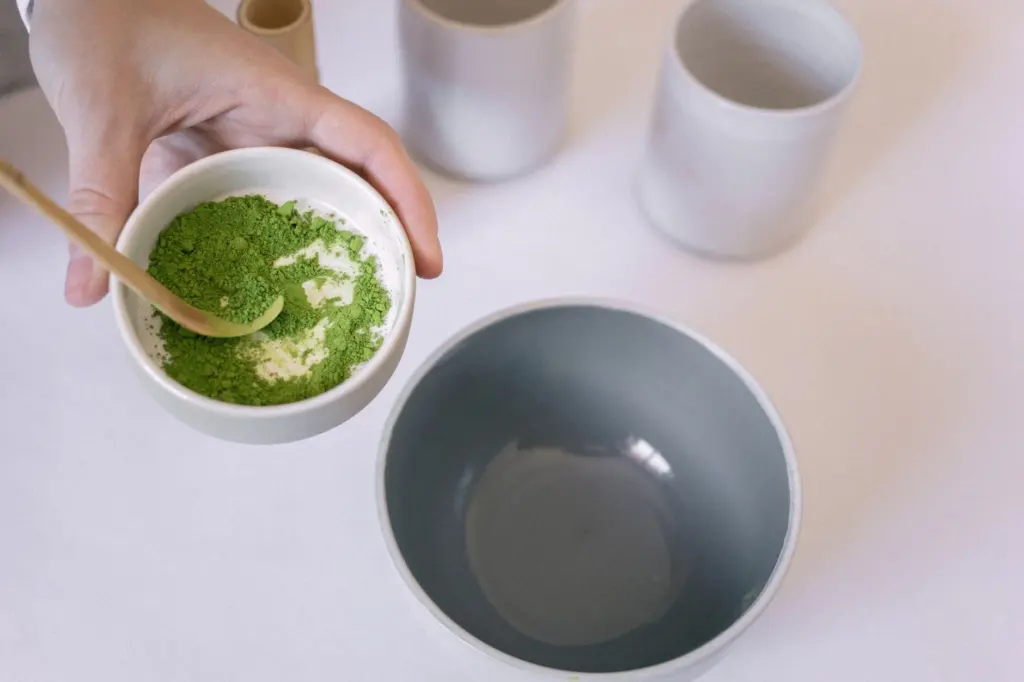
Matcha is not steeped. It is whisked directly into water to create a suspension and micro-foam, so the sifting and the whisking do the work that steeping does for leaf tea.
- Sift the powder. Put about 1 teaspoon of matcha through a sieve into a bowl, so clumps do not survive the whisking.
- Add hot water. Pour in a few ounces of water around 175 degrees F, as one producer recommends.
- Whisk to a foam. A traditional thin-tea ratio uses about 2 g matcha to 70–80 ml water, whisked to a fine foam.
- Drink it whole. Do not strain it. The suspended powder is the drink.
A smaller water volume gives a more concentrated bowl, and a larger one dilutes it. Adjust within the ratio above until the strength suits you.
Steeping green tea
Green tea is steeped and strained, so what reaches the cup depends on how you steep. The PMC review lists tea type, the amount of leaves per portion, brewing temperature and time as the factors that set the amount of active compounds. That makes your measuring and timing, rather than the tea alone, the main lever on strength.
Choosing and storing
Decide by the kind of drink you want, then buy only as much as you will finish. Matcha rewards a small tin, because a producer advises using it within a few weeks of opening, since fine powder fades faster than whole leaf. Loose leaf tolerates a slower pace.
- Choose matcha if you want a concentrated, whole-leaf bowl, accept a larger caffeine dose per serving, and are happy to use a whisk.
- Choose green tea if you want a milder cup, prefer to steep and walk away, or want a pantry staple that keeps its character longer once opened.
- Keep both if you like matcha for mornings and a steeped cup later in the day. The caffeine gap between them makes that a practical split.
If you would like a change from tea made from Camellia sinensis, the hibiscus approach in How To Make Refreshing Hibiscus Tea At Home (Simple Hot Or Iced Recipe) – Greatnorthernbrewing and the herbal option in Chamomile Tea Unwind: The Practical Guide To Brewing, Benefits, And Safety In 2026 – Greatnorthernbrewing are worth a look.
Frequently asked questions
| Question | Answer |
|---|---|
| What does shading change in the leaf? | According to the PMC review, shading the plants during growth enhances the synthesis of theanine, caffeine, chlorophyll and catechins. That is why shade-grown matcha is associated with these compounds. |
| How does green tea compare with black tea for catechins? | Green tea is much higher. The same review gives 5.46–7.44 mg/g for green teas against 0–3.47 mg/g for black teas. |
| Why do caffeine figures differ between tea guides? | Caffeine content depends on tea variety, weather during growth, harvest timing and brewing method, per the PMC review. Guides also define a serving differently, for example a measured weight of matcha powder versus a standard cup of steeped tea. |