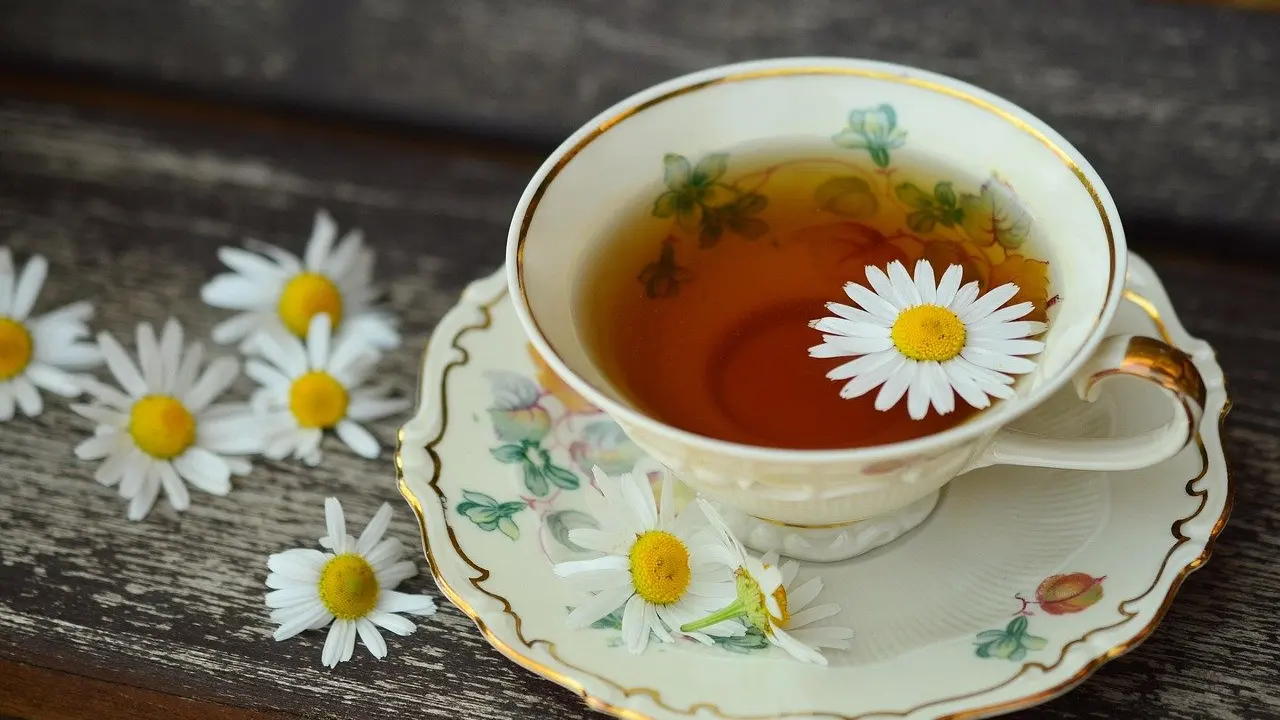
Reaching for herbal chamomile tea at bedtime? It is a caffeine-free flower infusion, steeped about 5 minutes in boiling water, and a calming evening habit rather than a proven sleep aid.
Most confusion about this cup comes from a few assumptions about what it is, what it does and how long to leave it in the water. The sections below take those assumptions one at a time. The tea hub explains how to brew loose leaf tea in general, so this guide stays with chamomile.
Chamomile is a tisane, not a true tea
The first misunderstanding is in the name. A peer-reviewed review describes herbal teas as infusions derived from plants and botanicals. True tea is an infusion of the young leaves, leaf buds and internodes of Camellia sinensis or Camellia assamica. Chamomile sits in the first group. One producer describes its chamomile as an herbal infusion made entirely from Egyptian chamomile flowers, not a true tea, and naturally caffeine-free.
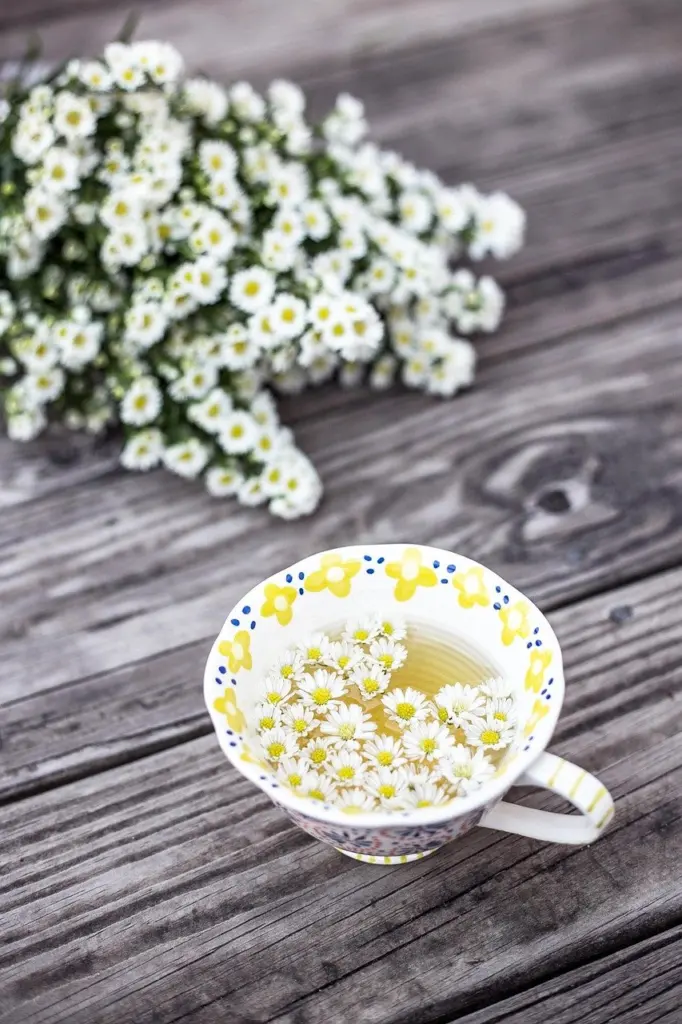
That distinction changes how you use the cup. Steeping advice written for green or black tea does not carry over automatically, and the lack of caffeine is the main reason chamomile is a familiar evening choice. The table sets common assumptions against what the evidence supports.
| Common assumption | What is supported | Planning use |
|---|---|---|
| Chamomile is a type of tea | It is an infusion of flowers. True tea comes from Camellia sinensis or Camellia assamica. | Brew it by chamomile guidance, not by green or black tea rules. |
| It contains caffeine like other teas | It is naturally caffeine-free. | A reasonable choice when you want a warm cup late in the day. |
| It is a sleep aid | It is described as a traditional wind-down cup at the end of the day. | Treat it as part of an evening routine, as covered in the sleep section below. |
| It is a plain flower, so every product is alike | Producers sell Egyptian chamomile flowers, and other varieties exist. | Read the label before comparing flavour or strength. |
The definitions and product details in the table come from a peer-reviewed review of herbal teas and a chamomile producer’s product guidance.
If you are weighing chamomile against a caffeinated evening alternative, the ranges in How Much Caffeine Is In Black Tea? Exact Ranges, Serving Sizes, And What To Expect In 2026 – Greatnorthernbrewing put a black tea cup in context. For a comparison between two true teas, see Matcha Vs Green Tea: Which One Should You Drink in 2026—Taste, Benefits, and How to Choose – Greatnorthernbrewing.
Choosing chamomile: varieties and formats
The second misunderstanding is that all chamomile is interchangeable. Medical News Today names two common tea varieties: German chamomile (Chamomilla recutita) and Roman chamomile (Chamaemelum nobile). It also says chamomile contains flavonoids, the chemicals thought to be behind its potential benefits. Because both varieties turn up in tea, check the label to see which one you are buying. That matters more if you want a repeatable cup from one purchase to the next.
The format you buy decides how much to use. The measures below come from one producer’s guidance, so use them as a starting point and adjust to taste.
- Loose flowers: use 1 teaspoon (2.5 g) per 8 oz cup. A tea infuser or strainer keeps the flowers out of your drink, and loose flowers suit people who want to control strength cup by cup.
- Tea bags: use 1 teabag per 8 oz cup. This is the simplest option for a quick evening cup, with no measuring.
- Sachets: use 1 sachet per 12 oz mug. These hold whole-leaf tea in mesh bags, so they suit a larger mug without doubling up.
- Single-ingredient products: one chamomile tea bag label lists chamomile as its only ingredient. Choose this kind if you want the flower’s own flavour, since blends add other ingredients.
Steep time and water temperature
The third misunderstanding is that a gentle flower needs gentle handling, or that one fixed time suits every product. Producer guidance differs, and the difference is useful. One producer recommends steeping for 5 minutes so the honey and apple notes have room to come forward. Another gives 1 teaspoon per 8 oz of water at 212° for 6 to 7 minutes. So the working range for how long chamomile should steep is 5 to 7 minutes.
Choosing your time
Start at 5 minutes and taste. If the cup seems thin, extend the next one toward 6 or 7 minutes rather than adding more flowers straight away. Change one variable at a time so you know which adjustment helped. The shorter end suits you if you like the delicate honey and apple character the first producer describes, while the longer end suits a fuller cup.
Water temperature
The second producer’s guidance uses 212°, which is water at a full boil. Chamomile is a flower infusion, not a delicate green tea, so there is no need to cool the kettle for it. Use fresh water, bring it to a boil and pour straight away.
A simple routine
- Heat the water to a full boil, 212°.
- Add the chamomile to your infuser, sachet or cup, using the measure for your format listed above.
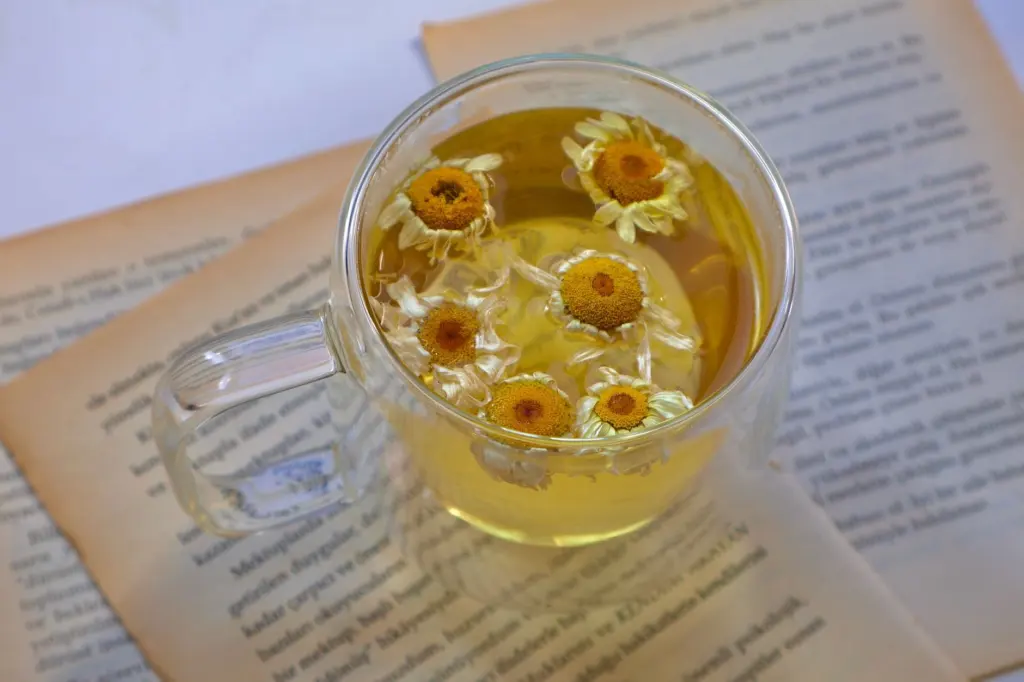
- Pour and steep for 5 minutes, or for 6 to 7 minutes if you prefer a fuller cup.
- Lift out the infuser, bag or sachet so the cup does not keep steeping while you drink.
Sleep and the wind-down habit
The fourth misunderstanding is that a cup of chamomile will make you sleep. The producer guidance describes chamomile as long enjoyed as a wind-down cup at the end of the day. That describes a tradition of use, not a promise about sleep. Medical News Today says only that flavonoids in chamomile may provide its potential benefits. So the honest answer to whether chamomile tea helps sleep is that it can be a pleasant part of an evening routine, but a guaranteed effect on sleep is not established here.
- Who it suits: anyone who wants a warm, caffeine-free drink to mark the end of the day. A fixed evening cup works as a cue to slow down, whatever the flowers themselves do.
- How to judge it: notice how you feel over a run of evenings rather than after one cup, and keep the rest of your routine steady so you can tell what changed.
- When to look elsewhere: if sleep trouble persists, talk to a clinician rather than adding more cups. Tea is not a substitute for medical treatment.
Safety and sensible use
Herbal does not mean risk-free for everyone. Chamomile is a plant product, and plant products can affect people differently. If you are pregnant, take regular medication or have a known plant allergy, ask a pharmacist or clinician before making chamomile a daily habit. For most people a single-ingredient cup is a simple, low-effort choice, but your own circumstances can change that.
Drinking it as a flavoured evening ritual is a sensible use. Relying on it to treat a health condition is not, and a persistent problem deserves a proper conversation with a health professional.
Frequently asked questions
| Question | Answer |
|---|---|
| How long should chamomile steep? | Producer guidance spans 5 to 7 minutes. Begin at the shorter end and lengthen the steep only if the cup tastes too mild. |
| Does chamomile tea have calories? | One chamomile tea bag label lists 0 calories per serving of 1 tea bag. Anything you add, such as honey, is separate. |
| What are tea sachets made of? | One producer says its tea sachets use NeoSoilon, a non-GMO material derived from sugarcane. Another describes its sachets as whole-leaf tea in mesh bags. |
| Where does chamomile tea come from? | Producers in this guide source their flowers from Egypt, and one product is USDA Certified Organic. |