| Effect or issue | What is supported | Planning use |
|---|---|---|
| Caffeine | About 70 mg per serving | Count a matcha latte as a moderate caffeine drink and fit it into your daily total with other caffeinated drinks. |
| Calm alertness | L-theanine is an amino acid that may promote relaxation without drowsiness; shading the plants for about three to four weeks before harvest raises its levels | Choose matcha when you want alertness without a heavy, wired feeling, and treat the effect as possible rather than guaranteed. |
| Antioxidants | Matcha is rich in catechins, plant compounds that act as antioxidants | Use matcha as a tea-based source of antioxidants, not as a treatment for any condition. |
| Medications | May interact with blood thinners, stimulants and anxiety medications | Check with a healthcare provider before making matcha a habit if you take any of these. |
| Pregnancy | Pregnant women should use caution | Raise it with your midwife or doctor before drinking it regularly. |
The figures and cautions above come from Calm’s matcha health overview and Healthline’s guide to daily matcha.
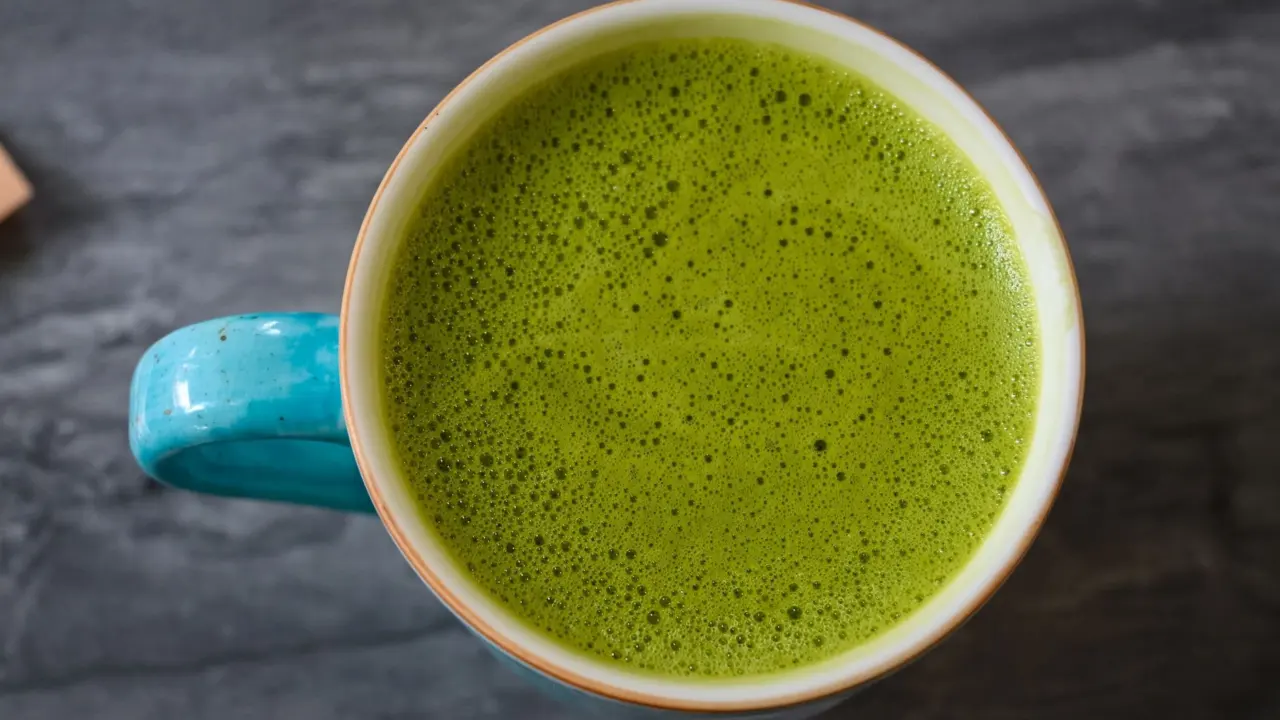
Matcha latte benefits come mainly from caffeine paired with L-theanine, plus catechin antioxidants. The drink suits people who want calm alertness, but medications and pregnancy call for caution.
Matcha is one style among many teas. If you also drink leaf tea, see how to brew loose leaf tea for the brewing side of the category.
Energy and focus from caffeine with L-theanine
The benefit most people notice first is the quality of alertness. Matcha supplies caffeine, and Calm describes its L-theanine as an amino acid that may promote relaxation without drowsiness. That pairing is the reason matcha is often chosen over a stronger, sharper drink when the goal is a steady working mood rather than a jolt.
The wording matters. The evidence here supports a possible calming effect alongside the stimulant, not a guaranteed change in concentration or performance. Treat matcha as a pleasant, lower-drama way to take caffeine, and judge it by how you feel across a work session.
How this changes your choices:
- Focused work blocks: A matcha latte fits a morning or midday stretch where you want to stay alert but settled. Make it your main caffeinated drink for that block instead of stacking it on top of coffee.
- Anxious or jittery days: The L-theanine point is a reason to try matcha in place of a stronger drink, but caffeine is still present. If your usual drink leaves you restless, start with a smaller serving and see how you respond.
- Replacing coffee: Matcha is a reasonable swap if you like a gentler, tea-based routine. It is not a decaffeinated option, and the caffeine figure below shows why.
Antioxidant support from catechins
Matcha is rich in catechins, a group of plant compounds that act as antioxidants, according to Calm. This is the second headline benefit of a matcha latte, and it explains why the drink is often described as more than a caffeine delivery system.
The supported claim is about what matcha contains and how those compounds behave as antioxidants. It does not establish that a daily latte will prevent or treat any disease, so avoid reading long-term health promises into it. The sensible reading is modest: a matcha latte can be one pleasant way to take in tea-derived antioxidants as part of a varied diet.
That reading shapes how you build the drink. If antioxidants are your reason for choosing matcha, the tea itself is the point, so keep the latte focused on it. A heavily flavoured version turns the drink into a dessert, and the catechin story no longer explains why you are ordering it.
Caffeine in a matcha latte
Matcha contains around 70 mg of caffeine per serving, according to Calm. That answers the common question of how much caffeine a matcha latte has, with one condition: the figure is per serving of matcha, so the amount in your cup depends on how much matcha goes into it.
For a practical comparison with another tea, the guide to How Much Caffeine Is In Black Tea? Exact Ranges, Serving Sizes, And What To Expect In 2026 – Greatnorthernbrewing sets out black tea ranges and serving sizes. Read the two side by side, keeping the serving basis in mind, before deciding which tea suits a given part of your day.
Ways to use the number:
- Budget it: Add a matcha latte to your other caffeinated drinks rather than treating it as a free extra.
- Watch the serving: A larger café drink may use more matcha than a single serving, so ask how the drink is made if the total matters to you.
- Match it to sensitivity: If you react strongly to caffeine, a smaller serving of matcha keeps the drink in your routine while lowering the dose.
Ordering or making a matcha latte
The drink is only as useful as the choices around it. Because the benefits belong to the matcha, the best versions let the tea lead and treat milk and sweetener as supporting decisions you can adjust.
- Ask about the matcha: Product details about how the tea was grown, including shade growing, tell you more about the likely L-theanine content than a menu description does.
- Keep sweetness adjustable: Ordering it lightly sweetened or unsweetened lets you judge the tea itself and decide how much to add.
- Pick it for the right reason: If you mainly want a flavour you enjoy, taste should lead. For a different taste profile among teas, What Does Oolong Tea Taste Like? The Complete Flavor Guide To Find Your Perfect Cup (2026) – Greatnorthernbrewing describes another option.
Who should check before drinking it regularly
Matcha may interact with blood thinners, stimulants and medications for anxiety, so Calm advises checking with a healthcare provider first. The reasoning is straightforward: matcha brings caffeine and plant compounds, and people on these medicines have the most to lose from an unexpected overlap.
Healthline adds that pregnant women should use caution. Take that as a prompt to talk through a regular matcha habit with your midwife or doctor rather than as a ban or an all-clear.
In practice:
- On blood thinners: Ask before adding matcha to a daily routine, not after.
- On stimulant or anxiety medication: The drink contains a stimulant and is promoted for calm, so the combination deserves a professional opinion.
- Pregnant or planning to be: Discuss the amount and frequency that suits you rather than guessing.
- Everyone else: Occasional servings fit most routines, but your own caffeine tolerance is the deciding factor.
Why shade growing changes the drink
The calming reputation of matcha has a growing explanation behind it. Shading the tea plants for about three to four weeks before harvest increases matcha’s levels of L-theanine, the amino acid that may promote relaxation without drowsiness, according to Calm.
This is why matcha is not simply green tea in powder form from the point of view of what ends up in your cup. Growing method affects the L-theanine that reaches the drink, so it helps to buy matcha whose producer says how it was grown. If a product gives no growing information, you cannot tell whether it carries the L-theanine advantage the matcha latte is credited with.
Catechins and caffeine come alongside this. Together, caffeine, L-theanine and catechins are the three compounds that explain what a matcha latte is meant to offer: alertness, a softer edge and antioxidant intake.
Frequently asked questions
What are the benefits of a matcha latte?
The supported benefits are calm alertness from caffeine with L-theanine and a catechin-rich antioxidant intake. They are possible effects, not guaranteed outcomes.
How much caffeine is in a matcha latte?
About 70 mg per serving of matcha, so a larger drink made with more matcha will contain more.
Is matcha latte safe during pregnancy?
Pregnant women should use caution with matcha, so ask a midwife or doctor how much, if any, suits you.
Does shade growing really matter?
Yes. Shading for about three to four weeks before harvest raises L-theanine levels, which is why growing details are worth looking for when you buy matcha.