| Measure | Supported value | Planning use |
|---|---|---|
| Black tea, 8 ounce cup | About 60 to 90 mg caffeine | Use as the working range for a standard mug when the tea has no label figure. |
| Oolong, 8 ounce cup | About 50 to 75 mg caffeine | A modest step down for anyone trimming caffeine but keeping a tea-leaf habit. |
| Black tea, 400 ml cup using about 2.5 g tea | About 25 mg to 87.5 mg | Shows how wide the spread is once leaf amount and tea type enter the picture. |
| Caffeine per 1 g of black tea | 10 mg to 35 mg | Weigh the leaf when you want to control the dose, instead of counting spoons. |
| Share of dry leaf weight | Around 1% to 3.5% caffeine | Explains why identical leaf quantities can give different cups. |
Per-cup ranges come from a tea merchant’s guide to tea types, and the leaf-weight figures come from a published black tea caffeine comparison.
How much caffeine in black tea depends mainly on cup size and leaf quantity: a standard 8 ounce cup lands at about 60 to 90 mg, and a longer steep or hotter water pushes a cup higher.
If you are starting from whole leaf, our guide on how to brew loose leaf tea covers the brewing basics, while this page concentrates on what ends up in the cup.
Choosing a cup for your day
The practical decision is how strong to brew black tea, not whether to drink it at all. One tea merchant puts oolong at about 50 to 75 mg per 8 ounce cup, a modest step below black tea’s 60 to 90 mg. Twinings describes tea as ranging from 0 mg for herbal teas to 60 mg for strong black teas per cup. Those figures differ, so use them as a bracket rather than a promise.
- Standard mug, no label to check: plan around the 60 to 90 mg range for an 8 ounce cup, and assume the upper end if you brew the tea strong.
- Oversized mug: a weight-based calculation gives about 25 mg to 87.5 mg for a 400 ml cup using about 2.5 g of tea, according to that comparison. A spread that wide makes the amount and type of leaf the details worth checking.
- Gentler black-tea habit: oolong sits lower in the published range and suits people who like a tea-leaf cup but want a smaller dose.
- No caffeine wanted: herbal infusions are the 0 mg end of the scale. For a soothing evening option, see Chamomile Tea Unwind: The Practical Guide To Brewing, Benefits, And Safety In 2026 – Greatnorthernbrewing.
Readers weighing black tea against a different style of tea for an energy lift can compare it with Matcha Latte Benefits: How This Ceremonial Green Tea Boosts Energy, Focus, and Long-Term Health – Greatnorthernbrewing.
Ways to lower caffeine in a cup
Brewing choices are the easiest lever, because they change how much caffeine leaves the leaf without changing the tea you buy. Tea Forte notes that higher temperature and a longer steep generally mean higher caffeine, and Stash Tea lists the ratio of tea to water, brewing time, water temperature and agitation as the brewing variables that matter.
- Shorten the steep. The longer the tea steeps, the higher its caffeine content, so lifting the bag early is the simplest adjustment. Accept a milder cup as the trade-off.
- Use cooler water. Black tea is usually brewed hot, and hotter water pulls out more caffeine. Letting the kettle settle before pouring moves the cup in the lower direction.
- Use less leaf. A smaller measure of leaf puts less caffeine into the same volume of water.
- Choose decaffeinated black tea. This keeps the black-tea flavour while the caffeine is reduced to a minimum.
- Switch to herbal for the last cup of the day. Twinings lists herbal teas as caffeine-free.
Why black tea caffeine varies
Black tea caffeine varies because the leaf, the way it was grown and processed, and the way you brew it all contribute. Stash Tea reports that studies show caffeine in tea depends on several factors, including cultivar, growing environment, manufacturing and brewing, and that content can vary, sometimes significantly, within a single type of tea. One brand’s figure for black tea is therefore not a safe stand-in for another’s.
Leaf, growing region and processing
The Guya comparison says a typical standard black tea holds around 1% to 3.5% caffeine by dry weight, and that where the tea was grown, how much sunlight it received and how the leaves were processed all play a part. For a buyer, the consequence is that two black teas of the same weight can behave differently in the cup. Judge a new tea by its label and your own experience of it, not by the category alone.
Steep time and temperature
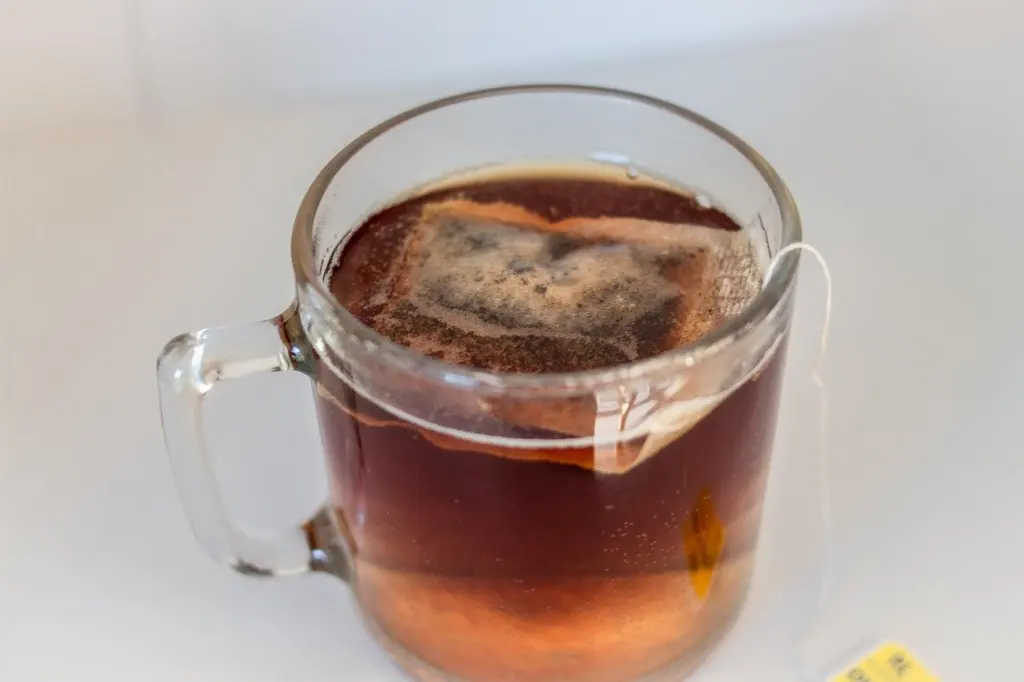
Black tea is brewed with long steeps and very hot water. Tea Forte points out that black tea steeps the longest at the highest temperature, which is why it generally contains more caffeine than its counterparts. The same brew choices that give black tea its body also raise the caffeine in the cup. If you want a strong flavour with less caffeine, cutting the leaf amount is a more reliable move than hoping a weak-looking brew will be low.
Reconciling published figures
Published numbers for black tea do not match, and the gaps are explainable. The merchant range of about 60 to 90 mg is stated per 8 ounce cup. Twinings gives 60 mg as the top for strong black teas, and the weight-based calculation runs from about 25 mg to 87.5 mg for a 400 ml cup. Each source assumes a different cup size, leaf amount and brew strength, so none of them describes your mug exactly.
- Use the top of the range for planning limits. If you are keeping an eye on total intake, assuming the stronger figure keeps you on the safe side.
- Use the lower figures for light brews. A short steep, cooler water and a measured small amount of leaf make the lower numbers more realistic.
- Trust a printed per-serving figure above a general range. It describes the particular tea in your cupboard, which is what the general ranges cannot do.
Loose-leaf and bagged servings
Loose-leaf black tea gives you control of the one variable with a direct per-gram figure: the leaf. With about 10 mg to 35 mg of caffeine per 1 g of tea, weighing a serving on a kitchen scale lets you repeat the same cup, and trimming the measure lowers the dose in proportion. A bagged cup is set by the maker’s fill, so steep time and water temperature become your main controls. Whichever you choose, keep the ratio of tea to water consistent, because it is one of the factors that shift caffeine from cup to cup.
Frequently asked questions
Is black tea lower in caffeine than coffee?
Generally yes. One tea brand says black and oolong tea may contain around 50 mg of caffeine per cup, about half that of brewed coffee, as noted by Tea Forte. A strong brew in a large mug can narrow that gap.
Is there a daily limit for caffeine?
The same source says experts agree that a maximum of 400 mg of caffeine per day is acceptable for most people. That is a ceiling, not a target, and individual tolerance can be lower.
Does decaffeinated black tea have any caffeine?
Possibly a trace. Decaffeinated tea has had its caffeine reduced to a minimum rather than removed entirely. Stash Tea states that its black, green and white teas are decaffeinated with a chemical-free CO2 process.
How can I find the caffeine in the tea I actually buy?
Look at the packaging or product page. Some brands list caffeine per serving on their blend pages and loose tea canisters, and that figure is more precise than any general range.