How to make matcha without whisk equipment: mix the powder into a smooth paste with a little warm water, then agitate it hard in a lidded jar, with a handheld frother, in a shaker bottle or in a blender. Never use boiling water.
Matcha is mixed into the cup, whereas leaf tea is steeped, so the wider basics in our guide on how to brew loose leaf tea cover a different technique. For timing on steeped teas, see How Long To Steep Tea: The Simple 2026 Guide To A Perfect Brew Every Time – Greatnorthernbrewing. If you are still choosing a style, Oolong Tea Vs Green Tea: Which One Should You Drink? A Practical 2026 Guide – Greatnorthernbrewing compares two popular options.
What a whisk does and how substitutes copy it
A bamboo whisk (chasen) is not essential. One matcha retailer’s guide to making matcha without a whisk says you need neither a chasen nor an electric whisk, only a container with a lid. Whatever you use has to do two jobs: remove lumps and, if you want it, work foam into the surface. Lumps are solved by the order in which you add liquid. Foam depends on the tool you choose.
- Make a paste. Press the matcha into a small amount of water until the lumps are gone, as Couplet Coffee’s matcha guide describes. A tea-shop guide from Thés Traditions calls this first step with a little hot water a crucial one, because it creates a smooth paste before any other liquid goes in.
- Add the remaining liquid. Water or milk goes in only once the paste is smooth, so the powder is already wetted when you start agitating.
- Agitate with your chosen tool. Shaking, frothing or blending then spreads the paste through the liquid and decides how much foam you end up with.
Expect different results from each tool. A milk frother gives a foamy surface similar to whisking, whereas a shaker will not produce the characteristic foam of a traditional whisk, according to Thés Traditions, and giving up the tool and relying on the paste alone gives a drink that is less foamy but still matcha. The water you use matters just as much as the tool, so that comes next.
Water temperature and powder amounts
The best water temperature for matcha is 70 to 80°C, which preserves vegetal notes and avoids bitterness. Boiling water effectively scorches the leaves, and Couplet Coffee likewise says to use warm water, not boiling. The frother recipe from Thés Traditions uses a small pour of water at 75°C, which sits inside that range and is a sensible target if you have a thermometer or a kettle with temperature settings.
For powder, Thés Traditions recommends 0.5 teaspoon for 60 to 70 ml of water and warns that going heavier means a chalky texture and an unbalanced flavour. A shaken drink from 27 Teas uses a teaspoon of matcha with 2-3 ounces of room-temperature water. Use the smaller hot serving when you are working in a bowl or small cup. Use the shaken recipe when you want a cooler drink. Adding more powder to chase a stronger flavour mostly costs you texture.
Comparing the household tools
| Tool | Typical amounts and timing | Best for | Planning use |
|---|---|---|---|
| Lidded jar | 1 teaspoon matcha, a small splash of warm water, then a hard shake for 15 to 20 seconds | Cooler drinks and no-gadget kitchens | Choose it when you own nothing but a container with a tight lid |
| Handheld milk frother | 0.5 teaspoon matcha, a small pour of water at 75°C, circular motions for about 15 seconds | A hot cup with a foamy top | Choose it for the closest result to a whisked bowl |
| Shaker bottle | Seal firmly and shake vigorously for about 30 seconds | Iced matcha lattes | Choose it when you want a fluid texture rather than foam |
| Blender | A bigger batch or an iced latte | Several servings at once | Choose it only when you are making enough to justify the cleaning |
Figures here come from the Thés Traditions preparation guide and the Couplet Coffee guide.
Mason jar or lidded container
A mason jar is the easiest place to start because it needs no extra purchase. Couplet Coffee’s method begins with about 1 teaspoon of matcha in a clean jar with a tight lid, followed by a small splash of warm water. Seal the jar and shake hard for 15 to 20 seconds. The same 27 Teas guide notes that a small Tupperware or glass jar with a lid is enough, so a clean food container will do if you have no jar.
This method suits cooler drinks and anyone commuting with the container. The tight lid is the important feature, because the shaking is what does the whisk’s work. Expect a smooth, lump-free drink rather than a thick crown of foam.
Handheld milk frother
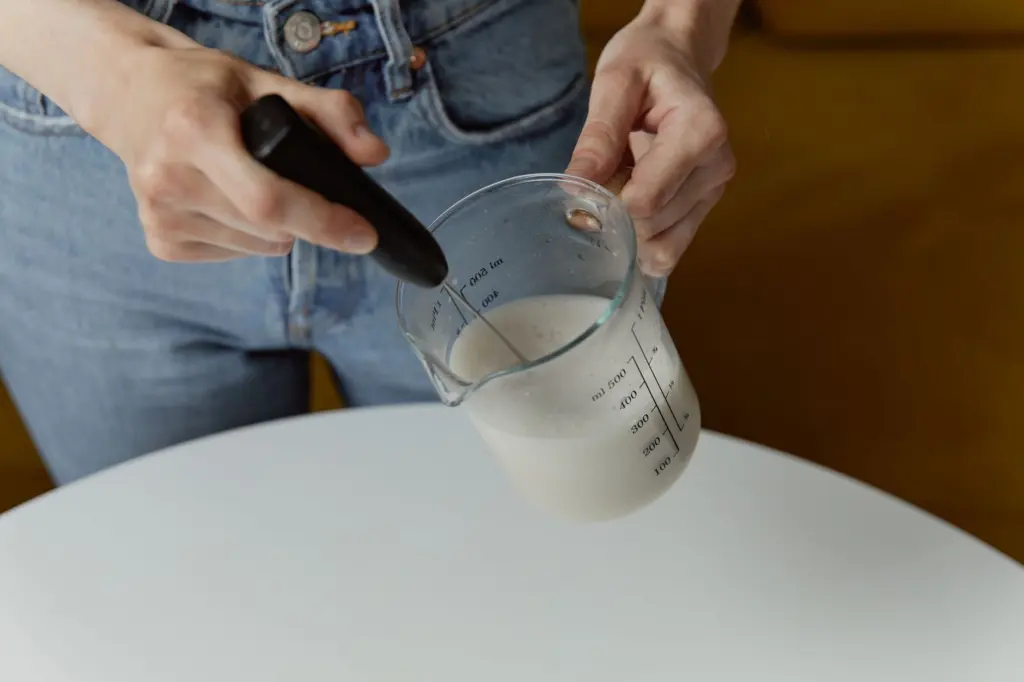
A handheld milk frother is the best alternative to a bamboo whisk, according to a matcha tool comparison from Seramikku, because it gives a foamy surface similar to whisking and is practical and easy to clean. For anyone who wants a hot cup with foam, it is the first tool to reach for.
Thés Traditions starts with 0.5 teaspoon of ceremonial matcha in the jug. Add a small pour of water at 75°C and stir it into a paste. Then place the frother in the bowl and work it in circular motions for about 15 seconds. Couplet Coffee offers a looser version for a tall cup: add the matcha and a little warm water, then move the frother around. A tall, narrow container helps keep the liquid from splashing out as the frother turns.
Blender
A blender works for a bigger batch, and Seramikku calls it the fastest way to make a frothy matcha. That speed has a price: cleaning is more extensive with this method than with the others. For a single cup the frother or jar is usually less effort overall, so keep the blender for occasions when you are making several servings together.
Shaker bottle
A shaker bottle suits people who want a matcha drink in a portable container. Thés Traditions says to add the matcha and water, seal the shaker firmly and shake vigorously for about thirty seconds. Seramikku gives the same timing, so there is agreement across both guides.
Set your expectations on texture. This method will not produce the characteristic foam of a traditional whisk, but the result is a fluid, pleasant drink. If foam is the priority, pick the frother instead. If a smooth, pourable drink is enough, the shaker is the lower-effort choice.
Iced matcha without a whisk
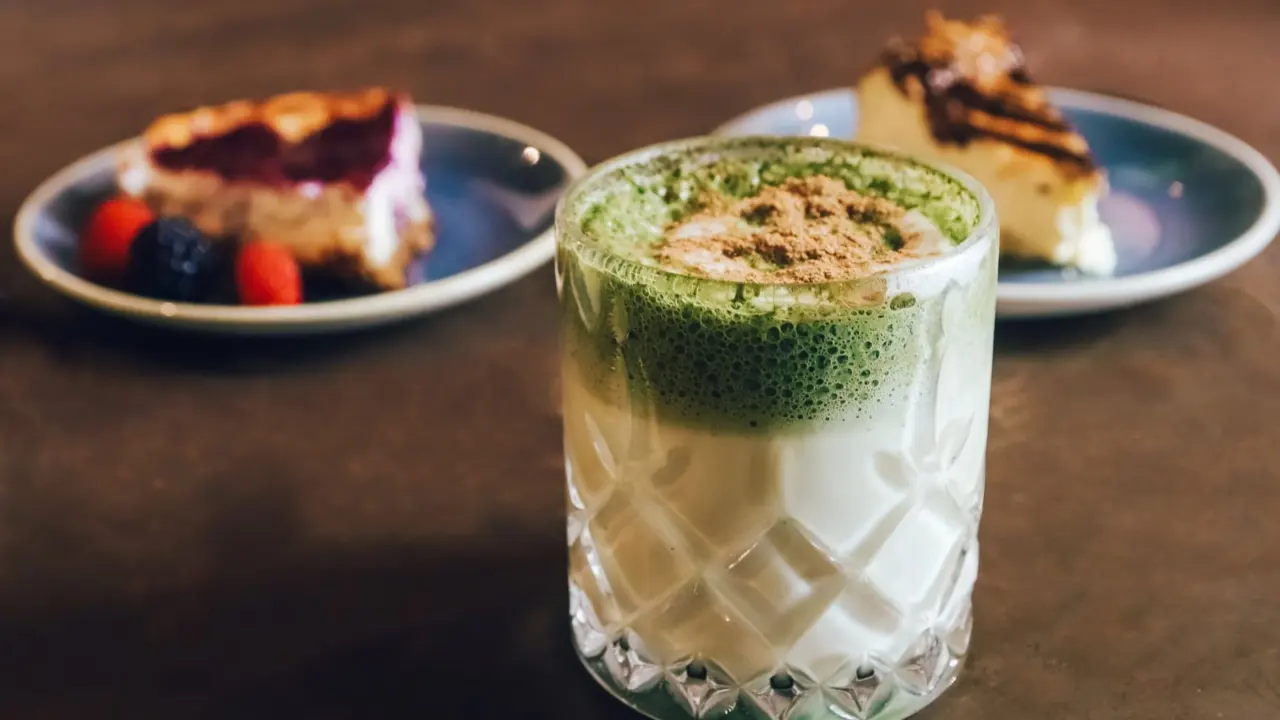
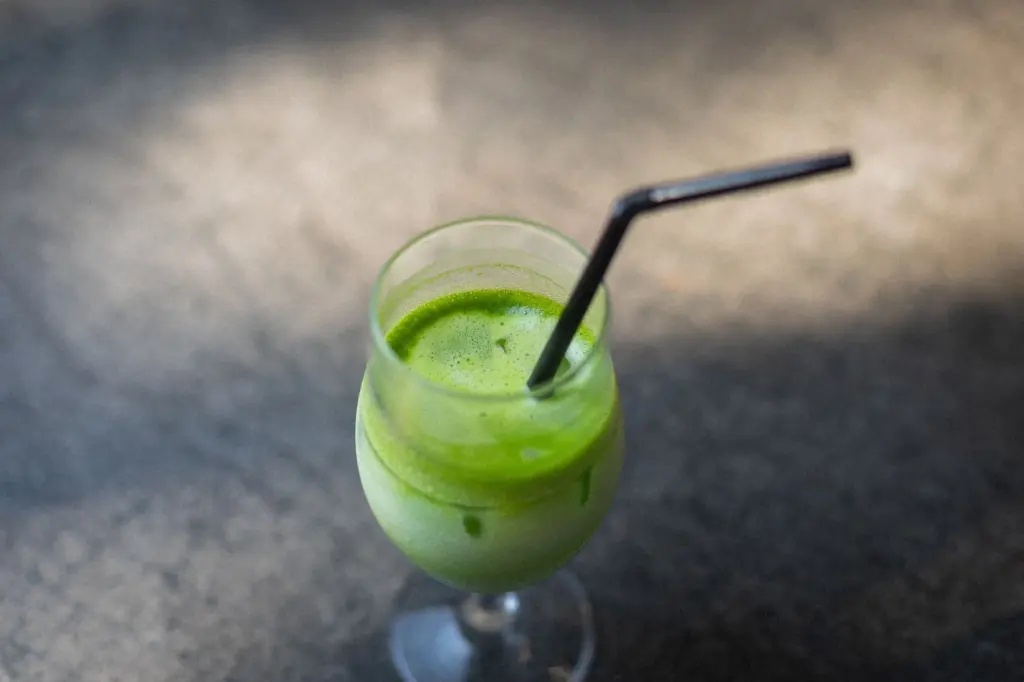
Yes, you can make iced matcha without a whisk. The shaker is the natural fit: Thés Traditions says it comes into its own with iced matcha lattes, and ice cubes can go directly into the shaker. A blender is the other route, since Couplet Coffee says it works for a bigger batch or an iced latte.
Make the paste first even for iced drinks, then add cold liquid and ice. Choose the shaker for one glass and the blender when you are filling several.
Frequently asked questions
Is a bamboo whisk still worth buying?
It is worth it if you want the most authentic, balanced matcha. Seramikku says it would always recommend investing in a bamboo whisk, though the household tools above give good results in the meantime.
Does sifting the powder help?
Yes. Thés Traditions says sifting improves the final texture by breaking up clumps, which matters most when you are mixing by hand rather than with a powered tool.
Can I put hot liquid in a blender?
Do not put very hot liquid in a sealed blender unless its instructions say that is safe, as Couplet Coffee cautions.
What if I only have a fork?
A fork is a last resort. Seramikku says it works best if you add the matcha first, then a little water, and then mix.